"Reason is always a kind of brute force; those who appeal to the head rather than the heart, however pallid and polite, are necessarily men of violence. We speak of 'touching' a man's heart, but we can do nothing to his head but hit it." --G.K. Chesterton
Showing posts with label Coquitlam Council. Show all posts

Tuesday, September 5, 2017

Foreign-funded interest group seeks to sway next civic election

An organization called the Dogwood Initiative (also known as Dogwood BC|) has announced it intends to get involved in next year’s municipal election in Coquitlam. The environmental and government-reform group has every right to do so, of course, but the potential consequences of its involvement further bolster my ongoing argument that the provincial government should deliberate very carefully before enacting any municipal-level campaign-donation “reforms.”

Such reforms are top of mind this week because, with news that the NDP government’s first throne speech is to be delivered on Friday, Sept. 8, speculation has turned to what the contents of that speech may be. Many observers predict the Horgan government will have to address its longstanding commitment to introduce provincial campaign-donation reforms. 

This, in turn, leads me to wonder if the NDP will decide to act on municipal-level campaign-donation and -spending restrictions, as has been called for by some local politicians but which has been opposed repeatedly by me; moreover, such possible restrictions were the subject of a cautionary letter sent by Coquitlam Council to the three provincial party leaders last spring.

Faithful readers of this blog will recall that I have long argued that restrictions on corporate and/or union donations will severely handicap independent and unaffiliated candidates, unfairly helping candidates who are members of slates or parties, or who have the backing (and access to membership lists) of labour unions.

What is also evident is that, if severe donation restrictions are put in place, outside special-interest groups will likely end up playing a bigger role, not only in pre-campaign marketing, organizing and lobbying efforts, but also during campaigns themselves. It is easy to imagine a variety of issue-oriented groups moving into the vacuum created by hamstrung candidates who, because of donation and spending restrictions, will be unable to produce the flyers, pamphlets, and advertising they could produce in past election campaigns.

And here’s where Dogwood comes into the picture. The organization boasts on its website that it had a successful (but, in my eyes, largely unrecognized) impact on the last provincial election. “We had 71 election related events over the last two months across B.C.,” the group reported in early June. “We made 36,564 phone calls to get out the vote. We had 13,576 live conversations with our supporters. We texted 63,000 people. That is powerful.

“We made sure our supporters, those who want to stop Kinder Morgan, ban big money, and end thermal coal exports, showed up at their voting polls. We talked to people who weren’t sure who they were voting for or if they were voting. We helped British Columbians find their polling place and bring the right ID. And we know by how tight this election was that every vote counted — especially in those important ridings where anti-Kinder Morgan politicians were elected like Burnaby North, Coquitlam-Maillardville and Courtenay-Comox.“ 

Coquitlam residents should take special note of the fact that DI is, essentially, claiming credit for helping elect NDP MLA Selina Robinson and defeat BC Liberal candidate Steve Kim.

As suggested above, it is worth underlining that the DI is an enthusiastic supporter of banning “big money” from elections   and has even called a “corruption inquiry”into BC politics. Of course, the way I see it, a ban on so-called big money would undoubtedly strengthen the DI’s hand, giving it less competition in the marketplace of political ideas.

Moreover, the DI’s call to eliminate “big money” from politics can easily be seen as rather rich coming from an organization whose $2.2-million-dollar budget (for the year ended March 31, 2016) has its own share of “big money” revenue, to the tune of $922,447 in grants.

All this wouldn’t necessarily be of much interest to Coquitlam civic voters were it not for the fact that, on June 13, Alex McGowan, who identified himself as “the Dogwood BC Provincial Organizer in the area including Coquitlam,” told me in an email that his organization “recently made the decision to invest in building teams in the area from Burnaby to Maple Ridge in advanced [sic] of the 2018 municipal election.” He continued, “I know you are an incredible advocate in your community and I think we can find space to work together.”

I responded to his invitation to meet me by posing a series of questions, including these:
*From which organizations, and of what total, did you receive grants in 2016? 
*What were the services you provided, and to whom, that accounted for the reported $350,427 in "fee for service" revenue in 2016?
*Your organization's website celebrates the "behind the scenes" impact the DI had on the last provincial election. The site also states that the DI is a "registered sponsor" under the "Election Act." ... [W]hich candidates or parties did you sponsor, and how much did you spend in support of that sponsorship? (Please itemize).
*Is it the DI's intent to formally or informally support candidates, based on their support of your policies and or campaigns, in next year's municipal elections? If so, can those candidates expect to receive indirect or direct financial support from the DI? If so, how much?

Mr. McGowan’s responses were revealing for what he said and what he did not say. Most importantly, he revealed that the group receives an unspecified amount of funding from sources in the United States. Here is his complete answer on this subject:

“On fundraising: - 60% of Dogwood's funding comes from non-grant sources: individuals and earned revenue; none comes from government or corporations; among the foundations that support Dogwood several are based in Seattle, a city that shares the Salish Sea with British Columbia. Dogwood’s campaign decisions are independent from any financial influence since no single source provides more than 5% of total revenue. We receive donations from over 10,000 individual Canadians.”

He did not provide the names of any of those foreign funders. But a little Internet sleuthing turned up the fact that the San Francisco-based Tides Foundation, which has been the subject of several exposes by National Post contributor Vivian Krause,  has been one of the DI’s major funders, pouring $187,425 into its coffers in2015 alone. 

One suspects that those BC voters, who are concerned about corporate and union donations to local politicians, would also be concerned about foreign advocacy groups’ support of a local special-interest group.

I am also wondering why Mr. McGowan did not answer my question about the nature of the “fee for service” revenue it received in 2016. He did say that, “We have registered as intervenors in the past three elections. We have never endorsed or financially supported any candidate or party as per our non-partisan status. We remain committed to that policy. Our election work continues to be about increasing turnout and engagement. In regards to election spending, all registered intervenors are required by law to submit detailed reports to all applicable election oversight bodies.”

That’s good information, but the non-partisanship implied by Mr. McGowan’s statement seems to be at odds with the declaration, quoted above, that, “We made sure our supporters, those who want to stop Kinder Morgan, ban big money, and end thermal coal exports, showed up at their voting polls.”


I had a brief phone chat this week with Mr. McGowan about some of the gaps in the information he supplied. We hope to have a fuller talk in the near future; if we do – and if any more details are forthcoming – I will update this article.

SEPT. 8.  I have now had a good discussion with Mr. McGowan about some of the issues I raised, above.
*On the fee-for-service issue, he stated firmly that DI does not sell its services to any political organization. Rather, its does training and consulting-type work for other non-profits.
*On the question of foreign donations, he stated that the amount the DI receives is "relatively small" and the money has been primarily used to support the DI's campaign to stop coal-port expansion.
*On the apparent conflict in values -- the DI is opposed to corporate and union funding of parties and candidates, but in favour of its receipt of foreign grants -- Mr. McGowan says the distinction is that the DI is not responsible for making decisions.
*On the possibility that, if successful, DI's opposition to union and corporate funding would create a more open playing field for DI and other organizations to influence public policy, he say Dogwood does not have the funds to run ads in every municipality.
*And, finally, on the apparent, de-facto partisanship, he said that, yes, the DI "definitely" wants to influence elections, but it does so by identifying party and candidate stances on crucial issues, and then communicating (to people they have identified who support the DI's goals) those stances. The DI does not specifically endorse or support any party or candidate, though.

For my part, I told him that it was my opinion that I am concerned about the impact of foreign money on local politics, that I believe its work constitutes de facto endorsement of candidates, and that the DI's anti-corporate and -union donations stance would, if implemented, unfairly favour candidates aligned with organized parties or slates, particularly if those parties and slates are affiliated with unions, which have access to volunteers and membership lists.

We agreed to disagree.


Monday, July 24, 2017

Green leader agrees to Coquitlam's call for 'careful deliberation' of campaign-spending reforms

The New Democrat-Green government in Victoria has pledged to ban corporate and union donations and to impose strict maximum-donation limits at the provincial level. Upon the announcement of the two-party pact (and, moreover, after the BC Liberals’ last-gasp Throne Speech, which delivered a flip-flop promise of campaign-financing reform), I feared that the new government would “double down” and automatically impose the same restrictions at the municipal level – something that I think would have a catastrophic impact on local-level politics.

I am pleased to report, however, that the leader of one of the two parties in the new political compact, Green leader Andrew Weaver, has, in response to a letter from Coquitlam Council urging caution in proceeding with such changes at the local level (a letter that was sent at my request and supported by all but one of my Council colleagues), issued a statement promising there will be “careful deliberation” before action is taken.

And thank goodness for that. As I have declared several times over the past few years and, moreover, have written in formal submissions to the provincial government on the matter, stringent donation regulations would have several unintended, negative consequences, the most worrisome of which is that they would severely handicap unaffiliated (i.e., independent) and new candidates, while at the same time giving an unfair advantage to political machines, parties, and those candidates who are affiliated with organizations that have a large membership base, such as labour unions. Please read one of my earlier blogs on the issue for a more complete analysis.

In Coquitlam’s letter to the leaders of the three political parties in the legislature, our mayor, Richard Stewart, pointed out that donors to municipal campaigns do not receive a tax credit for any portion of their donation, making the financing of said campaigns more difficult than those at the Provincial or Federal level.
Mayor Stewart continued that, In light of this, many candidates rely upon business or other organizational donations to support their campaigns to make up for the gap in individual contributions.

He also said that Coquitlam Council fears that removing this mechanism of support could lead to a dearth of candidates seeking local elected office, thereby increasing the power of incumbency and limiting voices from across the political spectrum. As well, he worried that such changes may also encourage an increase in slate politics and affiliated councils as candidates seek to bolster their support through a variety of labour and other organizations.

As far as I am aware, Dr. Weaver is the only one of the three leaders to respond to our letter. Here is the complete text of that response:

“Thank you for your correspondence of June 9 regarding municipal campaign finance reform. I apologize for the delay in responding. 

“I appreciate the concerns you raised regarding the effects of campaign finance reform at the Municipal level. I share your view that our democratic systems should be structured to support a wide range of candidates stepping forward to run for office, from a diversity of backgrounds and representing a diversity of views.  

“In my view, campaign finance reform at both the Provincial and Municipal levels is an essential way to strengthen our democracy and reduce the influence of special interests on our elections and on government decision-making. I believe that this reform can be undertaken in such a way that ensures that a wide range of independent candidates feel able to run for political office. 

“I agree that there must be careful deliberation by government on the impacts of any legislative change, and ensuring that government undertakes this reform in a comprehensive and deliberative way is a top priority of my caucus colleagues and myself.   


“Thank you again for writing on this crucial issue. If you have specific thoughts about how reforms might be best undertaken to address your concerns, my office would be delighted to hear from you.”  

I appreciate Dr. Weaver's thoughtfulness in dealing with this important issue, and look forward to future communication with him and his party on the subject.

Tuesday, March 24, 2015

Coquitlam's tax-shift policy is working

Just a quick note about council proceedings last night. One of the highlights was our passage, by unanimous vote, of fourth and final reading of the bylaws enacting the 2015 budget.

As noted earlier, the budget calls for the smallest property-tax increase (2.34%)  in a decade and continues the laudatory trend of decreasing annual percentage increases.

The budget also calls for another one-point "tax shift" which seeks to gradually reduce the large gap between the too-high property-tax rate that commercial properties pay and the rate that residential properties pay.

As I pointed out last night during our brief discussion about the budget, our tax-shift policy appears to be working. Indeed, the bylaw contains a rather revealing graph (see adjoining graphic) showing quite clearly that the tax burden on business is declining in relation to the burden on homes.

Some of this change is undoubtedly due to the fact that the residential-property base in Coquitlam is growing faster than the commercial-property base. But I am also assured that the tax shift is contributing to this pattern as well.

This is good news for business and business-lobby groups, which have long complained that our commercial tax rate is far to high. Here is a link to one of many stories on the issue. But it's also good news for residents, because a healthy business community is good for everyone.


Monday, November 24, 2014

They may be 'auxiliary,' but their work is essential

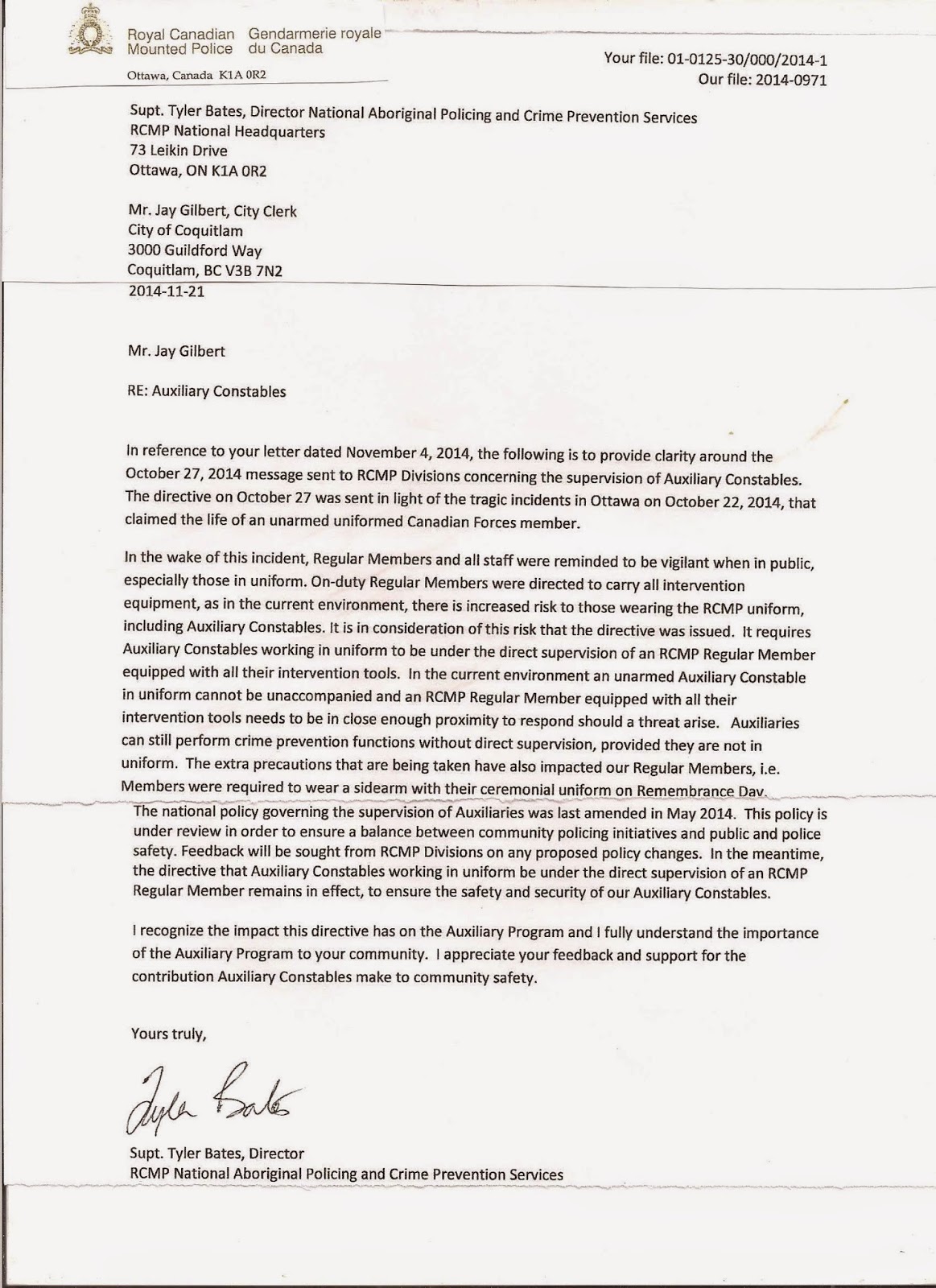
We're now getting some more clarity on the impact of last's month's edict from RCMP headquarters in Ottawa, informing us unilaterally (with no consultation)  that our 49 auxiliary officers would have to be under the "direct supervision" of a regular, armed member whenever the auxiliaries were performing their duties. And what we are being told is that the situation may not be quite as problematic as we had feared, and that all policy matters surrounding the use of auxiliaries are under review.

New letter from Supt. Bates.
 Here's a link to my previous posting about the issue; the link also includes other links to news stories about the edict, which Coquitlam Council made into a very public issue when it voted unanimously on Nov. 3 in support of my motion to ask Ottawa to overturn the edict.

At the time, we were concerned that the entire Auxiliary Constables program might be in jeopardy because the City simply couldn't afford to have a regular member shadow an auxiliary member who, for example, might be making a public-safety-related presentation to an elementary school. Similarly, the City couldn't afford to have regular members replace all the work currently done by auxiliaries.

In a letter dated Nov. 21 (see scanned copy of letter accompanying this story. I literally had to cut and paste the letter to have it fit on one page.), Supt. Tyler Bates, director of RCMP National Aboriginal Policing and Crime Prevention Services, explains that the edict was issued in response to the shootings on Parliament Hill. He explained: "...in the current environment, there is increased risk to those wearing the RCMP uniform, including Auxiliary Constables." And since auxiliaries are unarmed, it wouldn't be prudent to allow them to be unaccompanied by armed Regular Members.

That said, Supt. Bates added, "Auxiliaries can still perform crime prevention functions without direct supervision, provided they are not in uniform." He also added that the national policy governing the supervision of auxiliaries "is under review in order to ensure a balance between community policing initiatives and public and police safety."

He continued: "Feedback will be sought from RCMP Divisions on any proposed policy changes. In the meantime, the directive that Auxiliary Constables working in uniform be under the direct supervision of an RCMP Regular Member remains in effect, to ensure the safety and security of our Auxiliary Constables."

Bottom line: It's good to learn that unaccompanied auxiliaries will still be able to address students and youth groups, for example. But I'm also hoping that their educational presentations won't be rendered less-effective because they're being delivered by a non-uniformed auxiliary instead of one in the Mounties' garb.

I'm also saddened to learn that the the auxiliaries' effective crime-prevention patrols--which certainly are made more impactful by the fact the auxilaries are in uniform--cannot continue in their pre-edict form. And that's a real shame.


Tuesday, November 11, 2014

A day on the campaign trail

Photographer Michelle Doherty followed me throughout the day on Nov. 10 to record what one of my typical campaign days was like. The brilliant, crisp weather was atypical, however....and thank goodness for that. Here are a few of the photos she took. For the full album, please visit my political Facebook page by clicking here.

The handshake at the door. Always a good way to finish.
A lovely way to start the morning with Mary.


Chatting with Mabel Chan about the untimely death of her son Leo.

Ready to plant a sign.
Sharing a light moment Exec. Asst. Carol Jones
With GM of Strategic Initiatives Perry Staniscia

Brother-in-law Bill, Mary, me and friend Ron greeted a.m. commuters.


Thursday, November 6, 2014

'Real consultation is crucial'

A good-sized audience at Summit community centre for the meeting.
As I reported earlier, my Burquitlam speech on Tuesday centred on truck routes. My speech at tonight's Chamber all-candidates meeting at the Evergreen Cultural Centre will be about yet another, very specific subject. Stay tuned. 
Meanwhile, here are my notes from my opening address at last night's Westwood Plateau Community Association all-candidates meeting--a meeting that went off very well. My speech was fairly general, hitting on my usual themes:

Hi, I'm Terry O'Neill, and I’m seeking re-election to Council.
My background in journalism and volunteering taught me the importance of standing up for what you believe in, and for working hard to support others.
That’s why I helped found the Eagle Ridge Residents Association. And that's why I'm proud of the role I played on Council in shrinking tax increases over the past three years. I certainly intend to continue keeping a close watch on the bottom line if re-elected.
I also hope you give me the chance to build on the successes I helped initiate in the area of democratic reform. Real consultation is crucial!
As Coquitlam keeps growing, we need councillors with good judgement and solid experience to ensure that services and amenities keep pace. You can count on me to work hard and be prepared, so you receive the high-quality government you deserve.

And one more thing: As an independent candidate, I am not beholden to any slate, team or party. Instead, my priority is you, the taxpayer, the voter, the citizen. That's my promise, and you can count on it!

Wednesday, November 5, 2014

O'Neill and O'Neill: What's in a name?

Terry O'Neill
Shari O'Neill
Now that the election brochures have been distributed and the lawn signs have been planted, questions are arising once more about the two O'Neills -- yours truly, running for Coquitlam council, and Shari O'Neill, who is running for School District 43 board.
The short answer to the ubiquitous question is: we are not married; we are not even related.
The long answer is: we are not married; we are not even related. Hope that makes everything perfectly clear.
Meantime, I'm wishing Shari all the best in the election!


Tuesday, November 4, 2014

Actions speak louder than words

A large and motivated audience in Burquitlam. (Photo by me)
We have just returned home from the Burquitlam all-candidates meeting, at Banting Middle School, where most of the questions centred on the many changes the area is undergoing because of densification and the Skytrain.
It was a well-attended affair: almost 200 were in the audience. All the mayoral and council candidates showed up except for Mr. Mandarino and Mr. Kopahi. A big thank-you to the organizers and volunteers who made the event such a big success. Here are the notes for my opening, one-minute speech:

I know that Burquitlam residents are worried about the rapid rate of change here – the densification and the arrival of the Evergreen Line.
Everyone at this table will tell you that they are concerned, too. But I’ve always believed that actions speak louder than words.
And that’s why I was one of only three council members who voted last summer AGAINST a plan to turn Como Lake Avenue-- from Mariner to Clarke -- into a full truck route for at least two months.
Our GM of engineering opposed it, and the public had not even been consulted on a move that would have steered more heavy-truck traffic into the very heart of Burquitlam.
Thankfully, after a public outcry, council finally listened to reason and voted unanimously stop the experiment in its tracks.
I can assure you that there will be MORE of this kind of independent-minded and principled decision-making if you return me to council for a second term. That's my promise, and you can count on it!

Monday, September 15, 2014

Making it official: I'm running for re-election

Well, it's official. With the encouragement of countless supporters, friends and family, I've just declared that I'm running for re-election to Coquitlam City Council. I've dropped off my newly designed re-election brochure at the printers and I've distributed a news release to the local news media (text below). I've also re-engaged my completely new and redesigned primary website, www.terryoneill.ca. For the past three years, visitors to that address have been redirected to this blog. For the next couple of months, at least, terryoneill.ca will take you to the campaign website, while this blog can be reached at its direct address, electterryoneill.blogspot.ca. Wish me luck!

COQUITLAM – Coquitlam Councillor Terry O’Neill has announced he will run for re-election in the Nov. 15 general election. O’Neill, an award-winning writer and editor for 35 years before entering public life, was first elected to Coquitlam Council in the 2011 general election.
 “We’ve accomplished much over the past three years, but it is crucial that the gains we have made, in areas such as budget restraint, be protected,” says O’Neill, 63, who is not affiliated with a slate. “The taxpayers of Coquitlam cannot afford to go back to the days of recklessly high annual tax increases.”
Property taxes increased an average of 5.1% over the three years before O’Neill took his seat on council. Since then, the rate of increase has declined each year, averaging 2.8% annually, and was just 2.4% this year. All this, while the city improved roads, added parks and trails, and built a new fire hall.
“I’ve also worked hard to ensure that the city moves quickly to meet the demand for new housing,” O’Neill says. “It means more families can put down roots in our beautiful community. As well, increasing housing supply is the most efficient way to make housing more affordable.”
O’Neill also points to accomplishments in the area of democratic reform. His motion led to Coquitlam’s first e-Town Hall meeting. And, when the provincial government asked for input on campaign-spending reform, he argued successfully for regulations ensuring a level playing field for all candidates.
“Terry’s hard work as a City Councillor demonstrates his deep commitment to his constituents,” says Senator Yonah Martin of Coquitlam, Deputy Leader of the Government in the Senate. “I am certain that Terry’s re-election will continue to provide a strong, independent voice on Council that will greatly benefit the citizens of Coquitlam.”

Council has some important decisions to make in the coming four years. “With change coming so rapidly to Coquitlam in so many areas, it is imperative that proper public consultation occurs before Council takes action,” O’Neill says. “I will work diligently to do what’s best for Coquitlam. That’s my promise, and you can count on it.”

Thursday, August 28, 2014

Closing a Riverview loophole. Phew!

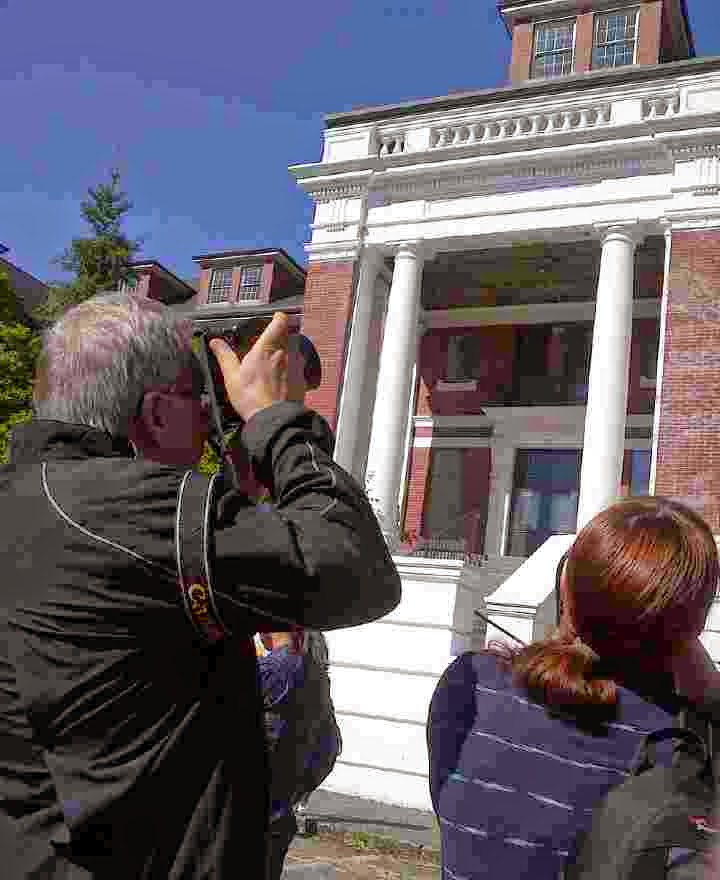
Riverview landmark. (Photo by Terry O'Neill)
You might recall that Council and the City of Coquitlam spent a fair bit of time and effort earlier this year to commission and then distribute a major new report on the City's vision for the future of the Riverview lands.
However, when BC Housing's lastest public-consultation summary report was made public last week, I noticed that it made absolutely no mention of Coquitlam's detailed and well-received report -- this, even though Coquitlam's report was distributed during the most-recent period in which BC Housing had collected public input, and even though BC Housing's report summarizes the input it received, not only at open houses and from official advisory groups, but also from additional persons and organizations.
And, so, I set about to find out what exactly was going on and to fix the problem.
First, some background: Written by mental-health expert Dr. John Higenbottam, the City's report recommends the establishment of a health-and-wellness campus on the grounds.
Immediately after the report was made public in mid-June, city staff circulated it to all interested parties, including various departments of the provincial government.
And so, after noticing that the report wasn't mentioned in BC Housing's latest summary of the input it has received, I messaged the organization coordinating BC Housing's visioning exercise, Brook Pooni Associates Inc. The company answered that BC Housing's Consultation Summary Report "includes all the communications material that has been officially [emphasis added] submitted to BC Housing to date."
Yes, the City's vision had been received by BC Housing and was being reviewed and considered by the provincial body, the company added. However, "It [Coquitlam's report] was not ... submitted to be included in the report."
My immediate reaction upon reading this can be summed up in one word: Yikes! My more-detailed thought was: Well, we'd better take steps to close this little loophole, in order to ensure that the City's report becomes part of the official record. 
The message from Brook Pooni ends with these sentences: "The next set of Open Houses will take place at the end of September. We would be happy to include the City's Vision report as part of our next Consultation Summary Report following the upcoming events."
Yes, I think that would be exactly what the City would want to happen, and I have now taken steps at City Hall to ensure that this does, indeed, take place.
I would hate to think that provincial decision-makers, who may very well be buried in paperwork, might downgrade (or, worse yet, not even be aware of) Coquitlam's report because it hadn't gone through official channels.
In the end, it's looking like "no harm, no foul." And thank goodness for that.
AUGUST 29 UPDATE: The folks at Brook Pooni have sent me an email saying that, in the interim (that is, until the City report can be officially submitted), they will place on the Renewing Riverview website either the full Coquitlam report or a link to that report. Most appreciated!

Wednesday, June 11, 2014

On second thought, NO

UPDATE: At its June 16 meeting, Coquitlam Council voted unanimously to, "Request the Ministry of Transportation and Infrastructure to clarify their [sic] position publicly regarding a potential connection between the South Fraser Perimeter Road and Highway 1 at the Port Mann Bridge; and 2. Take no action on City of New Westminster's request to support a new connection between SFPR and Highway 1/Port Mann Bridge until the Province responds to Council's request; and 3. Direct staff to forward a copy of the council report [upon which recommendations 1 and 2 were based] to the Ministry of Transportation and Infrastructure, City of Surrey and City of New Westminster."
Significantly, that staff report concluded by declaring that an SFPR-Port Mann connection "does little to improve street connectivity in areas in the region where it is most needed....[and that the project] has little, if any merit..." In addition, both Mayor Richard Stewart and Councillor Brent Asmundson said that the presentation made to council last week by the visiting New West politician was very misleading. I agree.

There's a story in today's Tri-Cities Now about a visit to Council on Monday by a delegation from the City of New Westminster. The story notes that the delegation asked for Coquitlam's support of New West's bid to push for a direct connection from the new South Fraser Perimeter Road to the Port Mann Bridge at a cost of up to $400 million.
South Fraser Perimeter Road (green), with current access points (blue).
Currently, the SFPR runs under the bridge but does not connect to it. New West would like the connectiion added, though, because it believes such a link would reduce traffic travelling across the Pattullo Bridge.
The New West delegation provided us with some seemingly common-sense arguments favouring the connection, and so New West's presentation ended with a feeling that Coquitlam would support the Royal City. There was no formal declaration or motion to that effect, though. 
And that turned out to be a good thing because, shortly after the crew from New West left the building, our staff started doing some digging and came up with a 2013 study, that was conducted by the Delcan group for the provincial Ministry of Transportation and Infrastructure, in response to New West's belated push for an SFPR-Port Mann connection. Significantly, that study painted an entirely different picture from that sketched by the New West delegation.
Here are some key quotations from Delcan's 2013 study:
  
1.1 Background  
A study conducted in 2001 (South Fraser Perimeter Road Planning and Preliminary Design Study - Associated Engineering) examined the feasibility of a connection between the South Fraser Perimeter Road and Highway 1 at 152 Street as an alternate to the connection at 176 Street / Highway 15.  The study concluded that such a connection to Highway 1 at 152 Street was not preferred due to the serious community severance impacts, significant community displacement issues, traffic capacity and operational shortfalls, noise impacts, as well as others issues.  
With the nearly completed construction of the South Fraser Perimeter Road, the City of New Westminster has questioned if providing a direct connection between the South Fraser Perimeter Road and Highway 1 at the Port Mann Bridge could divert traffic away from the Pattullo or Alex Fraser Bridges.  The City of New Westminster has thus requested the BC Ministry of Transportation and Infrastructure to re-examine the feasibility of this connection.  ...

The study then re-evaluated the information and came to the same conclusions as the 2001 study had: 

....In summary, providing a connection between the SFPR and Highway 1 at the Port Mann Bridge involves high implementation costs, significant community impacts, and only results in minor diversion from the Pattullo Bridge.  Furthermore, a significantly low benefit cost ratio of 0.25 indicates that the proposed connection would yield no value to the region. 

In short, this study completely rejected New West's idea. With this information now in hand, I feel that Coquitlam Council should not write a letter or pass a motion in support of New West's bid to add what would be a costly, disruptive and, ultimately, almost-useless connection. 

Thursday, April 3, 2014

Some action on chronic, prolific offenders


Justice Minister Peter MacKay was busy today defending his victims'-rights legislation, which will give to crime victims some statutory rights in the criminal-justice system. With justice reform in the news, I thought it would be a good time to update my campaign seeking tougher laws against chronic, prolific offenders.
Photo: The Tri-Cities Now
As you might recall, council supported my motion last November asking the Federation of Canadian Municipalities and the federal government to heed a request from the Canadian Association of Chiefs of Police calling for such action. I drafted the motion after hearing repeatedly from our local detachment of the RCMP about the huge amount of time and expense the police have to devote to countering the criminal activities of just a handful of bad guys. Here's a link to a recent statement, from our detachment, about the problem.
Well, since then, we've heard from both the FCM and Mr. MacKay himself in response to the motion. First, on April 1, the city received a letter (dated March 17) from Mr. MacKay informing us that his office had received the motion, and that he had shared our correspondence with "appropriate departmental officials."
"I would like to take this opportunity to commend the Council for its efforts to help ensure the safety of residents in the Coquitlam community," Mr. MacKay continued. "Our government is committed to strengthening the criminal justice system. I can assure you that Department of Justice Canada officials work closely with their provincial and territorial counterparts, as well as municipalities and police services, to address the issue of chronic offenders."
He then went on to explain how Ottawa is currently reviewing the bail regime in Canada. However, he did not specifically say he would embark on any new initiative designed to define "chronic, prolific offender" in the Criminal Code so that the current revolving-door in the courtroom can be slammed shut. When a chronic, prolific offender with 100 theft convictions gets the same slap on the wrist that someone with half a dozen convictions receives, it's just not right. Let's hope that that tackling the chronic-, prolific-offender issue is high on Mr. MacKay's to-do list.
Meantime, on March 24 Coquitlam received an e-mail from Diane Belanger, the FCM's administrative and resolutions coordinator, who advised us that our resolution was considered by an unspecified FCM committee which, in turn, recommended to the board in March that the resolution be sent back to staff for further analysis. The board concurred, and the motion will now be brought back to the September board meeting.
All in all, it's about as much action as I would have expected at this point. I'm pleased that both the FCM and Mr. MacKay have considered the motion seriously and have responded to us. Frankly, I don't expect to hear much more from the federal government on this, but will keep my fingers crossed that, in September, the FCM's board will decide to move the motion to the floor of the next FCM convention.

Friday, February 21, 2014

I'm actually a big supporter of the 'Citizen Budget'

Citizen Budget: Tri-City News left the impression I oppose it.
The time has come for me to turn the tables and "blame the news media." Sort of.
First, some background. You've all heard public figures complain about inaccurate and out-of-context reporting. It's a staple of political theatre.
And I must admit that, having spent more than three decades as a full-time journalist, I've been the target of some of those complaints--even, on rare occasions, justifiably.
But in my two-plus years as a Coquitlam City Councillor, I haven't had much reason to do any complaining myself. For the most part, the reporting of my activities on Council has been both fair and accurate, albeit never as thorough as I would like.
On this latter subject, now that I'm on the "inside," it often pains me to see how a complex subject, such as a neighbourhood plan or a new strategy of some sort, that council has spent several hours discussing and on which staff has clearly spent many dozens or even hundreds of hours working, is boiled down to eight-to-ten paragraphs by a reporter.
Nevertheless, when the boiling-down captures the essence of both the content of the report and the discussion around it, there's really not much to gripe about.
That said, I must now declare that the top story on the front page of the Feb. 21 issue of the Tri-City News has somewhat misrepresented my position on a bold, new public-opinion-gathering exercise that the City will likely adopt in the next round of budget consultations.
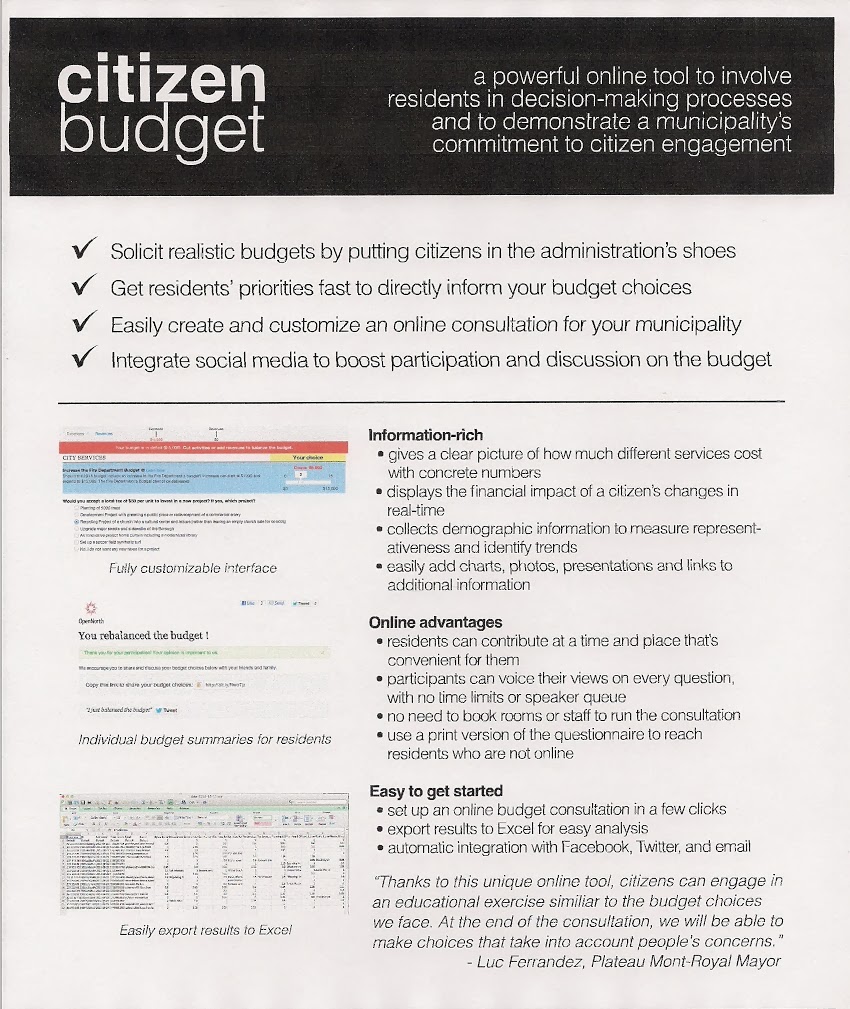
My colleagues and I on Council discussed the Citizen Budget initiative at the Feb. 19 meeting of the Finance Standing Committee. The initiative would allow interested citizens to express their opinions about such budget-related issues as revenue and expenses, and programs and personnel by way of an interactive, easy-to-understand website.
Now, those of you who have been following my political career to date will know that I have been a big supporter of new ways to engage citizens. In fact, it was my initiative that led to Coquitlam holding its first-ever E-Town Hall meeting.
Understandably, then, I'm a big supporter of the Citizen Budget initiative, and said so in my presentation at Committee. However, I also pointed out that the on-line opinion-gathering apparatus would be just one way that Councillors could and should gather information; others include our own research, face-to-face interactions with the community and the annual Ipsos Reid poll.
And on the subject of polls, I noted that, unlike the Ipsos Reid one, the on-line initiative would not be scientific, and so its results would have to be taken with a grain of salt.
Ultimately, though, I opined that the Citizen Budget initiative would be beneficial, not only for its ability to sample public opinion and obtain more budget feedback, but also for the very fact that it sends the message to all residents that the City really does care what they think.
After all that, however, Tri-City News lumped me in with "a few Coquitlam councillors [who] voiced concerns about the program's lack of controls," reporting that, "Coun. Terry O'Neill said while the Citizen Budget could capture the mood of Coquitlam's 139,000 residents, 'this has to be taken with a grain of salt' as the results aren't as scientific as those from the Ipsos Reid poll." (The story does not appear to be posted online yet.)
True enough, as far as it goes. But, of course, the problem is that story doesn't go nearly far enough, in that it leaves the impression I am opposed to the plan when, in fact, the exact opposite is true.
And there you have it. It's more of an exasperated quibble than an angry complaint. But, on a subject (voter and citizen engagement) on which I have devoted so much attention, it's important that the complete story be told.

Thursday, February 6, 2014

The big push (and push-back) for subsidized daycare

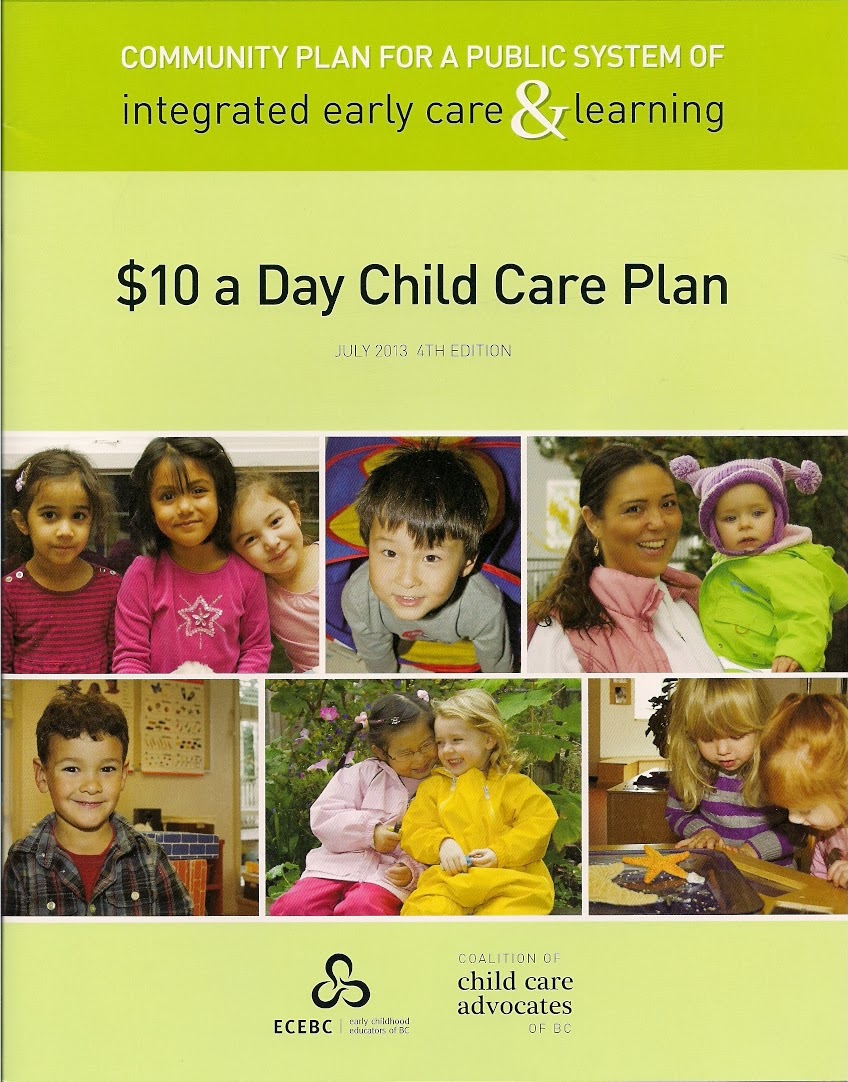
This past Monday, council-in-committee received a presentation from Sharon Gregson, a former COPE/Vision Vancouver school board trustee and now spokesperson for the Coalition of Child Care Advocates of BC, who called for Coquitlam to endorse a plan that would see the provincial government heavily subsidize all daycare in B.C. so that users would have to pay only $10 a day to put their preschool child in care. It would be free to those earning less than $40,000 a year.
The campaign already has scores of official supporters, but several aspects of the presentation didn't seem quite right, and so I questioned Ms. Gregson when she concluded. Chief among the issues that raised my eyebrows were these:
1. Her description of the childcare situation in B.C. as a "crisis." OK, I know that some folks have a difficult time getting good-quality childcare, but a "crisis"? Where's the evidence for such a loaded term? None was presented.
2. Her statement that the program would eventually cost $1.5 billion and that it would eventually establish a government-run daycare monopoly, staffed by highly paid unionized government workers. What could possibly go wrong? 
3. Her use, in a PowerPoint presentation, of supporting quotes from two business leaders. Upon my questioning, it became apparent that these quotes were made only in general support of an educated workforce, and not in support of a major government program to pay for daycare.
I also asked about the seemingly high number of jobs that she said would be taken up by women who were free to enter the workforce. I think the figure was something like 17,000. On this subject, Ms. Gregson had a persuasive answer. Indeed, in subsequent research, I discovered that many studies have found that, freed of childcare duties, women are able to find jobs in great numbers.
However, in doing that research, I also found evidence that one of the supposedly great benefits of putting more children into daycare--that they will be better prepared for school--wasn't being found in Quebec, the longstanding home of government-subsidized $7-a-day daycare. This Maclean's story of a few years ago reports on an academic study that found a reverse effect, in fact.
You know where I'm going with this, right? Bottom line: I have reservations about the program, and think Council should steer clear of any ill-considered endorsement.

On a related subject, our City Clerk forwarded my colleagues and me an on-line comment left by one of Ms. Gregson's supporters. Below is the text of that comment and my response. I have omitted the name of the correspondent to protect her privacy.
Comment:
I attended the council-in-committee meeting on Monday, February 3, 2014 at which Sharon Gregson appeared before the council with a presentation on the $10-a-day child care initiative. Her informative presentation was followed by a fairly intense questioning by council members. I was taken aback and not a little disappointed that Ms. Gregson was not asked what, to me, should have been the first question - how would this initiative benefit the citizens of Coquitlam? 
I hope that the mayor and council will give this initiative the attention it deserves and vote to lend their endorsement to this proposal. 
My response:
Our City staff forwarded your online comments to members of Council, and I would like to take the opportunity to respond.
First, thanks very much for taking the time not only to write your note, but also—and more importantly—to attend council in committee in the first place. I assume that you were one of the women in the audience to whom Ms. Gregson referred during her presentation.
Let me start by acknowledging that I am one of the councillors who asked questions—and tough ones at that—during Ms. Gregson’s presentation. This does not mean, however, that I do not recognize the importance of the public-policy proposal Ms. Gregson was advancing. Rather, I think it reflects that very importance, in that I feel that before council makes any decision to join the many other municipalities that are now calling for the $10-a-day plan, we must ensure that all the arguments that support it are solid ones, that the facts and figures should be reliable, and that the quotes being used to support the initiatives must be authentic.
Furthermore, I am well aware of many government initiatives being launched with great fanfare, high expectations and a huge budget, only to end up producing unanticipated negative consequences. For example, a Maclean’s story of July 11, 2011,  “Is subsidized daycare bad for kids?” reports on the findings of three researchers who found that, contrary to the claims (and hopes!) that Quebec’s $7-a-day daycare would better prepare preschool children for school, “the effects of the program are found to be negative for five-year-olds and less convincingly negative for four-year-olds.”
The economic case for installation of a heavily subsidized daycare system seems to have some merit, especially in the area of allowing parents to enter the workforce. Nevertheless,  it is my duty as a City Councillor to be as certain as I can be when making decisions that will impact taxpayers throughout the province.
Ultimately, we all want what’s best for our children, whether it involves the sort of income redistribution that the $10-a-day plan calls for (that is, money being taken from taxpayers and given by government to government-subsidized daycares, which in turn allows more parents to enter the workforce and become taxpayers themselves), or whether it  simply means finding a way to keep more money in the hands of parents so that they can make the best decisions for themselves.


Tuesday, January 21, 2014

Mundy Forest must be for the people

Mundy Park (Photo: City of Coquitlam)
You’d be forgiven for thinking that there was little potential for controversy in relation to a forest-management plan for Mundy Forest, which is the subject of a press release issued today by the City of Coquitlam.
However, the plan was actually the subject of some rather intense discussion, initiated by yours truly, at Council-in-Committee's meeting on Monday afternoon.
My concern was centred squarely on the vision for the forest, specifically on whether the management plan would see actions taken to protect and enhance the forest primarily in
the name of “ecological integrity” or rather--and, more properly, I feel--for the enjoyment of the people of Coquitlam, for whom the forest, and the park itself, is a fabulous amenity..
I spoke to the issue at some length on Monday afternoon because my examination of staff documents involving the plan did, in fact, reveal a shift in the focus towards a Nature-first approach, something with which I most heartily disagreed because I believed it could lead to increasing exclusion of people from the park. We needed a balance, I said, in which a healthy park existed so that the people of Coquitlam could enjoy it to its fullest.
Mundy Park (Photo: City of Coquitlam)
In the end, I received a firm declaration from the acting GM of Parks, Recreation and Culture that the plan would reflect a more balanced approach than what was indicated in a key document that had sparked my investigation and ultimate presentation to committee. And that’s good.
So, if you’ll bear with me, I’ll walk you through the research I did and the conclusions I reached. First, from a report to committee dated March 4, 2013 (but actually presented to council in committee on March 11, 2013), comes this important vision statement:
‘The forest in Mundy Park provides tremendous benefits to the community, which are directly linked to the health and aesthetic qualities of the forest. Without a comprehensive Forest Management Plan (the "FMP") there is the risk that the pressures the Park faces such as insect and fungal pest infestations, wildfire, windstorms, invasive plant infestations, and unsanctioned uses may erode or eliminate the benefits residents currently enjoy.
Note, the emphasis here is on keeping the forest healthy so the citizens of Coquitlam can continue to enjoy the ‘tremendous benefits’ to the community that are linked to the health and aesthetic quality of the forest.  This, I believe, is the correct and proper vision.
But now, let’s look to Attachment 2 of Monday’s report, dated Aug 22, 2013, where we read about the mandate of the community focus group. I quote bullet three:
“To provide input on and support recommendations for the preservation and enhancement of the forest in Mundy Park and the benefits it provides for the community.”
Note the “and.” It’s important, and it represents a slight shift in focus. Let me explain. If this sort of statement were to adhere to the vision laid out last March, this “and” should have been the phrase “in order to” – as in “To provide input on and support recommendations for the preservation and enhancement of the forest in Mundy Park in order to provide benefits for the community.” But, with this new “and,” we see the focus shifting away from the original vision – that a healthy forest is needed to provide benefits to the citizens, to one in which the health of the forest (moreover, the “preservation and enhancement” of the forest) is a goal unto itself, and is merely a complementary goal to that of the benefits a healthy forest can provide to the community. This shift isn't particularly worrisome by itself, but took on new significance when read in relation to a more recent report.
Indeed, the whole vision thing gets particularly troubling with the staff report we considered on January 20. Look to page 3 of the main body of Monday's report, and we find the original vision sliding even further out of sight. Here, we read:
The key objective of the Forest Management Plan is to maintain the ecological integrity of the Park by allowing natural process to occur, with the intention of accommodating sensitive recreational uses while allowing the forest to reach the climax stage of maturity.”
Mundy Park (Photo: City of Coquitlam)
Get that? Where we started out by describing a vision that clearly stated the main reason for having a healthy forest was for the benefits to be derived by the citizens of Coquitlam, we now have a vision that declares the main reason that we intend to spend hundreds of thousands of dollars to better manage this forest is – not to better serve the public – but, rather, to protect the forest’s “ecological integrity” [something, by the way, that I consider an impossibility in an urban setting] while merely "accommodating" use by the citizens – and only “sensitive” recreational uses at that.
I must note here that the Diamond Head Consulting report, which summarizes ideas coming from a workshop with the Community Focus Group, contains different wording yet again – including a Draft Vision Statement that is more in line with council’s original intent. This report is appended to the January 20 staff report.
But, regardless of that Draft Vision Statement wording, what’s important is how staff interprets and puts into action the wording. And, given the interpretation on page three of Monday’s report– where “sensitive recreational uses” are merely to be accommodated -- I feared that staff may be headed in a direction that is not in line with either council’s or the advisory committee’s intentions.
With all this explanation complete, I then told committee that, if we are going to spend all this time, effort and money, our primarily vision should be to maximize the benefit that this expenditure will deliver to our citizens. This is the view of Mundy Park that is held by the vast majority of Coquitlam residents, I'm sure.
Indeed, it would be a regrettable waste of taxpayers’ money if we proceed with a Forest Management Plan whose primary goal is to enhance impossible-to-achieve “ecological integrity” at the expense of protecting and improving the park so that the benefits to the residents of Coquitlam can be maximized.
I argued that we should return to the original vision, the one that received clear support from council and is reflected in the Community Focus Group’s Draft Vision Statement. I said that we needed to spell out very clearly that the goal of spending this money is not to foster a healthy urban forest primarily for its own sake, but rather so that it may continue to provide the tremendous benefits that it currently provides to the Citizens of Coquitlam.
And, in the end, I received very firm assurances that public use and forest protection/enhancement would go hand-in-hand, and that the forest would not be treated as some sort of pristine ecological preserve from which people would be excluded. And thank goodness for that!

Tuesday, December 10, 2013

The always-thorny issue of councillors' pay

Several years ago, Coquitlam council adopted a policy of awarding itself the same annual percentage pay raise that the city's workers receive through the bargaining process. Last night, however, the councillor-in-permanent-opposition-who-sits-among-us (CIPOWSAU) attempted but failed to overturn the policy.
My 'pay stub.'*
CIPOWSAU used the discussion around final reading of the 2014 budget bylaws to raise the issue. Remember: this is a budget that, as I wrote last week, once again lowers the average tax increase facing Coquitlam taxpayers while, at the same time, increases services and programs across a broad spectrum of areas, from police and fire, to parks and culture.
At first, CIPOWSAU wielded some erroneous math in making his argument to kill the 1.75% hike, incorrectly saying at one point that it would result in the mayor receiving a raise in the magnitude of tens of thousands of dollars a year.
In fact, all the raises for all council will amount to $9,850 a year. This, in turn, creates a 0.01% tax increase, which in turn equals 17 cents a year per household.
But, of course, the strongest argument in favour of killing the increase is one of optics, and I certainly understand how it appealing it might look for a cost-conscious council to axe its own increases.
On the other hand, it's also being penny wise and pound foolish, because the logical outcome for a council that refuses to raise its own pay incrementally is that, because of inflation, council's pay would become increasingly minuscule--to the point where, in 15-20 years or so, qualified candidates might very well decide that its not worth the time and effort to be on council. And that would certainly not be in Coquitlam's best interests.
Moreover, a future council would eventually have to take the always-controversial step (remember Port Coquitlam's quandry of a few years ago?) of attempting to bridge the big gap in one big raise--a move that would have a significant negative impact on the homeowners who happen to be paying taxes in that year, while letting previous taxpayers off the hook.
Personally, I didn't need this year's raise, and said as much to my colleagues in private several weeks ago. I also agree with a position advanced by Mayor Richard Stewart last night that the provincial government should take the issue out of all councils' hands by legislating a standardized pay scale reflecting the size of the jurisdiction being governed.
Ultimately, I supported the increase on the principle that a small, incremental raise in councillors' pay is the best way to link current council remuneration to current taxpayers. Delaying increases only serves to unfairly burden the future taxpayer.
In the end, council voted 7-2 (with Bonita Zarrillo siding with CIPOWSAU) to support the increase.

*I've illustrated this blog with a copy of one of my recent pay stubs. It shows that a councillor's salary for two weeks is $1422.12 before taxes. This works out to just under $37,000 a year. On top of that, we receive a $711 bi-weekly indemnity related to our service, plus a car allowance.
You'll see in the bottom left corner of the print-out that gross year-to-date pay amounts to $57,786. I understand that this figure is higher than you'd rightly conclude (if looking at the above numbers) because it reflects lump-sum retroactive payments we received following the approval of the city-workers contract last year.
And, for the record, councillors are not enrolled in any pension plan, gold- or otherwise-plated.

Tuesday, December 3, 2013

Budget breathing room for taxpayers

By a vote of 8-1 (with the lone dissenter being the usual opponent), Council gave the first three readings to a series of budget bylaws last night. Here are the notes for the speech I delivered in support of the 2014 budget.

I will oppose this budget. Actually, let me change the tensing of that sentence. I would oppose this budget:
  • If it didn’t continue lowering the average tax-rate increase.
  • If it didn’t continue lowering the residential tax-rate increase.
  • If it didn’t continue the one-point tax shift that makes commercial tax-rate increases even lower.
  • If it didn’t provide for major new public-safety initiatives.
  • If it didn’t respond to taxpayers’ requests for transportation improvements
  • And if it didn’t carry with it a major commitment to continually examine city services, to see what should be added and – significantly – what should be stopped.

And so, what does Budget 2014 deliver?
Spirit Square, Coquitlam (Photo by Terry O'Neill)
First, and importantly, it calls for an average tax rate increase of 2.42% -- almost a full half-a-point lower than last year’s increase, which was lower than the year before’s, and which in turn was lower than the year before that. Indeed, since the high-water mark of an average 7.11% increase in 2009, the average tax-rate increase has been on a straight line down. And that’s good.
Hand-in-hand with that, both the residential rate and the commercial rate increases are lower as well, compared to last year. And, because of our continuing commitment to a one-point tax shift, the commercial rate increase will be only 1.8%. This is good news too.
And what about those public-safety initiatives? Four new firefighters and two new RCMP officers represent a pretty major commitment, and so I think we’ve met that standard.
As for transportation improvements, which our annual Ipsos Reid survey continues to ranks very high our citizens’ wish list, this budget commits significant funds to road rehabilitation and road enhancement in every part of Coquitlam.
And what about future decisions? I was very pleased when I heard, as part of our budget deliberations, that our management team was launching a new initiative to identify services and programs that are no longer needed, with the aim of eliminating them….. thus allowing the property-tax-payer to keep a few more dollars in his or her pocketbook or for the city to add new services. The initiative is called the Stop-Doing List, and if there’s one initiative that should never be put on that list, it’s the Stop-Doing List itself!
And so: I had six criteria for the budget, and all six were met.
This doesn’t mean the budget is perfect, from my point of view. The record of our lengthy deliberations shows that I opposed some spending measures that the majority approved. But while the budget is not perfect, it is certainly good enough. And it’s even better when you factor in the major decrease in utilities fees which the mayor mentioned. In fact, it means the average homeowner will pay only $15 more on his or her combined property-tax/utilities bill this coming year. 
But on the strength of its diminishing tax-rate increase alone, a rate which gives us the second-lowest tax increase in more than two decades (the lowest, in 2005, being 2.27%) it is definitely good enough. On the single issue of tax increases -- the one everyone watches, the one that makes the headlines --  it’s certainly better than the budget of 1994 (4.8% average increase), '95 (4.8%), '96 (3.45%), '97 (5.36%), '98 (4.5%), '99 (4.5%), 2000 (5.78%), 2001 (4.9%), 2002 (2.77%), 2003 (4.1%) and, well, you get the picture.
If there is any hesitation among my colleagues over whether to support this budget, let me suggest: Don’t let the perfect be the enemy of the good. --meaning that insisting on perfection often results in no improvement at all. If a majority of us voted against this budget, not only would all the hard work we’ve done be put in jeopardy, but the landmark low levels of tax-rate-rise that we’ve achieved might also be threatened.
There’s also something called “the Pareto Principle” or 80–20 rule, which observes that it commonly takes 20% of your effort to complete 80% of a task, while to complete the last 20% of a task—that part of it which it takes to achieve a perfect outcome-- takes 80% of the effort. Considering this, along with the fact that achieving absolute perfection is impossible, leads us to the law of diminishing returns, in which it becomes clear that the closer one gets to achieving perfection, the increasingly inefficient your work becomes.
And so, what does it mean for the budget tonight? As I said before, it’s a good one, but not perfect. But, remember, not only is achieving “perfection” is impossible, but the longer we work trying to achieve perfect, the harder and more inefficient that work becomes, and the greater the chance that we’ll become stalled and achieve nothing at all.
Something is certainly better than nothing.
And this something – this budget which answers the needs of so many of our citizens, from the hopeful new homeowners on Burke Mountain to the actively involved seniors at Dogwood Pavilion, from the commuter looking for better roads to the merchant looking for a lighter tax load – is certainly something worth supporting.


Wednesday, November 13, 2013

Culture community thinks big

Artist's conception of new theatre at the Evergreen Cultural Centre.
Council has just wrapped up its two-day budget-requests hearings. Today was devoted primarily to hearing requests from cultural groups, two of whom -- Place des Arts and the Evergreen Cultural Centre -- have especially-major and -costly capital-project desires.
The PDA presentation asked for some significant dollars this year to move ahead with a major expansion of their Maillardville-area facility.
The folks from the ECC weren't quite as advanced in their requests, but did urge council to move ahead with a long-dormant plan to build a major new theatre-- or at least start coordinating/communicating with our neighbouring cities to get planning started.
The ECC presentation was supported by an architect's conception of that much-larger theatre (see above) than the current Studio Theatre. This idea has been on the drawing boards for several years now.
Council has yet to make any decisions, but we did remind everyone that the city is currently in the midst of developing a Parks Recreation and Culture Master Plan--a document that will certainly help us prioritize our needs over the next several years.

Tuesday, November 5, 2013

Hope for the homeless in our community

Photo from HopeForFreedom.org
Coquitlam Council voted unanimously last night to approve a temporary-use permit to allow Eagle Ridge Bible Fellowship to join the rotation of Tri-Cities-area churches that are relaunching the cold/wet-weather mat program for the next two years--until Coquitlam's permanent shelter at 3030 Gordon opens. This good news was capped by some great news from my Council colleague, Brent Asmundsen.

First, some background: Following several successful seasons, from 2007-2011, of providing emergency shelter to the homeless, the temporary emergency-shelter program changed in 2011-2012, moving from the model of monthly rotations between churches to one in which it was based in just one church, the Grace Campus of Northside Church in Port Coquitlam.

But for reasons that have still not been fully explained, Port Coquitlam council voted last summer to deny Northside the right to continue this year, thus threatening to kill the entire program.

Happily, however, the Hope for Freedom Society was able to organize a new schedule of monthly rotations through other churches in the three Tri-Cities communities. The last "i" to be dotted was Coquitlam's approval of the temporary-use permit for Eagle Ridge Bible Fellowship.

But one other consideration remained: some sort of bus was needed to collect the homeless and deliver them to the emergency shelters at night and, of equal importance to local residents who didn't want indigents hanging around their neighbourhoods, taking the shelter-users back to their normal haunts in the morning.

And that's where Asmundson quietly sprung into action. Working behind the scenes, he not only obtained an out-of-service shuttle bus from Translink, but he also raised $22,800 from several local developers to cover operational costs for at least this year. Asmundson had made no public announcement of this act of community leadership, but Mayor Richard Stewart asked him last night to tell the public what he had done.

And so, his voice cracking with emotion at times, he told the story to the public last night. The audience applause was spontaneous and their admiration genuine. My congratulations to Brent and to all involved in this truly charitable enterprise.