"Reason is always a kind of brute force; those who appeal to the head rather than the heart, however pallid and polite, are necessarily men of violence. We speak of 'touching' a man's heart, but we can do nothing to his head but hit it." --G.K. Chesterton

Tuesday, January 14, 2014

A distorted view of history

Pres. Johnson signing the Civil Rights Act, 1964. (Wikimedia Commons)
It's a relatively small thing, it's an American thing, and it's about something that happened 50 years ago.
But it still took only a few minutes for PBS's newest American Experience episode, about the year 1964, to get under my skin, to provoke me to mutter at the screen, and finally to inspire me to turn the program off in protest.
What so bothered me was the section of the show dealing with the U.S. Senate's passage of the historic Civil Rights Act. The episode made the unmistakable assertion that the bill risked defeat at the hands of filibustering Republicans and that it was only when some Republicans ended up being persuaded by Lyndon Johnson to change their minds that the bill became law.
But this assertion set off some alarm bells in my noggin. I know enough about American history of that era to know that Southern Democrats, not Republicans, were the main force against integration and equal rights for African-Americans.
Yes, there must have been some Republicans who opposed the bill and, yes, there must have been some Republicans who changed their minds and ended up supporting it. And those GOP senators may have even been the deciding factor. But surely, I thought, the major opposition to the bill must have come from Southern Democrats--and the PBS show didn't utter a peep about them.
And so I started a bit of online research and it took all of one minute to find this voting record in the Senate on the Civil Rights Act:
Democrats in favour, 46; opposed, 21. Republicans in favour, 27; opposed, 6. Far more Democratic Senators by number (21) and percentage (31%) opposed the civil rights bill than Republicans (6, 18%).
One would have thought that PBS would have found this worth noting. But one would have been wrong.
Perhaps if I had read the online description of the episode, offered on the PBS website, I would have been better prepared to accept the historical distortion it contained. Here's a slice of the "Introduction" the network provided for the show:
"In myriad ways, 1964 was the year when Americans faced choices: between the liberalism of Lyndon Johnson or Barry Goldwater's grassroots conservatism, between support or opposition to the civil rights movement, between an embrace of the emerging counterculture or a defense of traditional values."
Notice how neatly the sentence aligns "liberalism" and a Democratic president with support for civil rights, while at the same time aligning the Republican Party (Goldwater's) with opposition to civil rights? Yes, Goldwater opposed the Civil Rights Act but remember: 82% of Republican senators supported it.
And so, what's the bottom line? Is it more evidence to support the oft-made assertion (by US commentators like Rush Limbaugh and the like) that PBS has a left-wing or liberal bias? Does the big omission tell us something about the sorry state of American culture? Or does it simply make us aware that TV documentary-film makers can make mistakes? I have my suspicions. What are yours?


Thursday, January 9, 2014

Still thinking of the Philippines

After Typhoon Haiyan tore through the Philippines last November, I learned that the City of Coquitlam had a special relationship with a one of the hardest-hit cities, Ormoc, and I immediately started wondering whether we here could do anything, on a city-to-city basis, to assist in Ormoc's recovery. I am pleased to report that I have now received word from the Federation of Canadian Municipalities (FCM) that discussion has started at the national level that may see some relief being offered.
Photo from: storify.com/ZackStieber/
First, some background. Coquitlam's relationship with Ormoc was not a "sister city" type one, but is better characterized as an "adopted little sister" type. Specifically, under a program funded by the FCM, Coquitlam shared some of its administrative expertise with Ormoc to assist it in modernizing city management. It's my understanding that some Coquitlam officials travelled to Ormoc several years ago to give first-hand instruction. And that's where the relationship ended.
Regardless of whether Ormoc is our "sister city" or merely an "adopted little sister," I still thought it was worthwhile exploring whether Coquitlam could do anything to help the city of 191,000 in its time of crisis. I learned that, under B.C.'s Community Charter, we are not allowed to provide any direct financial assistance, even a token amount.
However, I was pleased when Mayor Richard Stewart ended a council meeting late last year with a fine speech outlining our relationship with Ormoc and urging everyone to consider donating to a relief organization, such as the Red Cross.
Following all that, I contacted the FCM before the Christmas holidays to enquire about the possibility of it restarting the program that allowed Coquitlam to help Ormoc several years ago. I didn't hear back, so I sent another email this month, this time to a different address at the FCM, repeating my earlier question.
This week, I finally heard back. Here is the partial text of the response I received from Pascal Lavoie, Program Manager for Asia with FCM International:

First of all, I’d like to thank you for contacting us. The devastating event that occurred in the Philippines last October [sic] drew a lot of attention from our members. We appreciate your interest and support in seeking ways to provide assistance to the reconstruction effort that affected communities are facing.

At the moment, we don’t have programming in the Philippines anymore hence our capacity to get involved has been limited. We’ve expressed our support to national politicians and met with staff at DFATD (formerly CIDA) to offer our assistance and discuss opportunities to get involved in the reconstruction effort.

FCM is considering a program to help with the reconstruction phase. However it is unclear if will consider funding such an initiative. Our experience (with similar natural catastrophes in Sri Lanka, Indonesia, and Haiti) is that it takes some time to put such a program in place (12-18 months). At the moment, we are still at the stage of preliminary discussions.

And there you have it. It's certainly something to keep our eyes on throughout the year.

Saturday, January 4, 2014

Factoring in assessed values for 2014

Our home in Eagle Ridge: The assessed value decreased this year.
If you're a homeowner, you probably received your 2014 Property Assessment Notice in the mail last week. And, if you're like many homeowners (especially the thousands of new homeowners in Coquitlam), you might be somewhat confused about the relationship between your property's assessed value and the property taxes you pay to the City every year. So, here's a basic explanation.
First, City Council decided last fall that it needed to raise revenue from residential property taxes by 2.8% in 2014 in order to cover the costs of inflation and increased services, such as the new fire hall on Burke Mountain and two new RCMP officers. This means that, if you own a typical residential property in Coquitlam, your property tax, for city purposes, will increase 2.8% this year.
Second, we must factor in the property assessment issued by the BC Assessment Authority. This year, the authority found that the average Coquitlam home decreased in value by 1.8% increase over last year. (By the way, the average single family home in Coquitlam is valued at $701,000.)
What this means is that, if your property value decreased by the average 1.8% this year, you'll be facing the above-mentioned 2.8% tax increase. But, if your property value decreased by less than that -- or increased --- you'll be paying an incrementally larger increase. If the value of your property declined even more than 1.8%, your tax increase will be less than 2.8%.
For the record, our 33-year-old home in Eagle Ridge was assessed at $624,000 this year, a decrease of $8,000 (or about 1.3%) compared to 2013.
Here's a link to a Tri-City News story about assessments in the province. Here's a link to the BC Assessment Authority website, where you can find pages that explain the process and let you know how you can appeal or complain about your assessed value; deadline for all complaints is January 31, 2014.
I hope this helps. Please feel free to contact me directly at toneill@coquitlam.ca if you have any questions or comments about any of this.
Note: This blog has now been updated with new figures regarding assessed values in Coquitlam.

Tuesday, December 10, 2013

The always-thorny issue of councillors' pay

Several years ago, Coquitlam council adopted a policy of awarding itself the same annual percentage pay raise that the city's workers receive through the bargaining process. Last night, however, the councillor-in-permanent-opposition-who-sits-among-us (CIPOWSAU) attempted but failed to overturn the policy.
My 'pay stub.'*
CIPOWSAU used the discussion around final reading of the 2014 budget bylaws to raise the issue. Remember: this is a budget that, as I wrote last week, once again lowers the average tax increase facing Coquitlam taxpayers while, at the same time, increases services and programs across a broad spectrum of areas, from police and fire, to parks and culture.
At first, CIPOWSAU wielded some erroneous math in making his argument to kill the 1.75% hike, incorrectly saying at one point that it would result in the mayor receiving a raise in the magnitude of tens of thousands of dollars a year.
In fact, all the raises for all council will amount to $9,850 a year. This, in turn, creates a 0.01% tax increase, which in turn equals 17 cents a year per household.
But, of course, the strongest argument in favour of killing the increase is one of optics, and I certainly understand how it appealing it might look for a cost-conscious council to axe its own increases.
On the other hand, it's also being penny wise and pound foolish, because the logical outcome for a council that refuses to raise its own pay incrementally is that, because of inflation, council's pay would become increasingly minuscule--to the point where, in 15-20 years or so, qualified candidates might very well decide that its not worth the time and effort to be on council. And that would certainly not be in Coquitlam's best interests.
Moreover, a future council would eventually have to take the always-controversial step (remember Port Coquitlam's quandry of a few years ago?) of attempting to bridge the big gap in one big raise--a move that would have a significant negative impact on the homeowners who happen to be paying taxes in that year, while letting previous taxpayers off the hook.
Personally, I didn't need this year's raise, and said as much to my colleagues in private several weeks ago. I also agree with a position advanced by Mayor Richard Stewart last night that the provincial government should take the issue out of all councils' hands by legislating a standardized pay scale reflecting the size of the jurisdiction being governed.
Ultimately, I supported the increase on the principle that a small, incremental raise in councillors' pay is the best way to link current council remuneration to current taxpayers. Delaying increases only serves to unfairly burden the future taxpayer.
In the end, council voted 7-2 (with Bonita Zarrillo siding with CIPOWSAU) to support the increase.

*I've illustrated this blog with a copy of one of my recent pay stubs. It shows that a councillor's salary for two weeks is $1422.12 before taxes. This works out to just under $37,000 a year. On top of that, we receive a $711 bi-weekly indemnity related to our service, plus a car allowance.
You'll see in the bottom left corner of the print-out that gross year-to-date pay amounts to $57,786. I understand that this figure is higher than you'd rightly conclude (if looking at the above numbers) because it reflects lump-sum retroactive payments we received following the approval of the city-workers contract last year.
And, for the record, councillors are not enrolled in any pension plan, gold- or otherwise-plated.

Tuesday, December 3, 2013

Budget breathing room for taxpayers

By a vote of 8-1 (with the lone dissenter being the usual opponent), Council gave the first three readings to a series of budget bylaws last night. Here are the notes for the speech I delivered in support of the 2014 budget.

I will oppose this budget. Actually, let me change the tensing of that sentence. I would oppose this budget:
  • If it didn’t continue lowering the average tax-rate increase.
  • If it didn’t continue lowering the residential tax-rate increase.
  • If it didn’t continue the one-point tax shift that makes commercial tax-rate increases even lower.
  • If it didn’t provide for major new public-safety initiatives.
  • If it didn’t respond to taxpayers’ requests for transportation improvements
  • And if it didn’t carry with it a major commitment to continually examine city services, to see what should be added and – significantly – what should be stopped.

And so, what does Budget 2014 deliver?
Spirit Square, Coquitlam (Photo by Terry O'Neill)
First, and importantly, it calls for an average tax rate increase of 2.42% -- almost a full half-a-point lower than last year’s increase, which was lower than the year before’s, and which in turn was lower than the year before that. Indeed, since the high-water mark of an average 7.11% increase in 2009, the average tax-rate increase has been on a straight line down. And that’s good.
Hand-in-hand with that, both the residential rate and the commercial rate increases are lower as well, compared to last year. And, because of our continuing commitment to a one-point tax shift, the commercial rate increase will be only 1.8%. This is good news too.
And what about those public-safety initiatives? Four new firefighters and two new RCMP officers represent a pretty major commitment, and so I think we’ve met that standard.
As for transportation improvements, which our annual Ipsos Reid survey continues to ranks very high our citizens’ wish list, this budget commits significant funds to road rehabilitation and road enhancement in every part of Coquitlam.
And what about future decisions? I was very pleased when I heard, as part of our budget deliberations, that our management team was launching a new initiative to identify services and programs that are no longer needed, with the aim of eliminating them….. thus allowing the property-tax-payer to keep a few more dollars in his or her pocketbook or for the city to add new services. The initiative is called the Stop-Doing List, and if there’s one initiative that should never be put on that list, it’s the Stop-Doing List itself!
And so: I had six criteria for the budget, and all six were met.
This doesn’t mean the budget is perfect, from my point of view. The record of our lengthy deliberations shows that I opposed some spending measures that the majority approved. But while the budget is not perfect, it is certainly good enough. And it’s even better when you factor in the major decrease in utilities fees which the mayor mentioned. In fact, it means the average homeowner will pay only $15 more on his or her combined property-tax/utilities bill this coming year. 
But on the strength of its diminishing tax-rate increase alone, a rate which gives us the second-lowest tax increase in more than two decades (the lowest, in 2005, being 2.27%) it is definitely good enough. On the single issue of tax increases -- the one everyone watches, the one that makes the headlines --  it’s certainly better than the budget of 1994 (4.8% average increase), '95 (4.8%), '96 (3.45%), '97 (5.36%), '98 (4.5%), '99 (4.5%), 2000 (5.78%), 2001 (4.9%), 2002 (2.77%), 2003 (4.1%) and, well, you get the picture.
If there is any hesitation among my colleagues over whether to support this budget, let me suggest: Don’t let the perfect be the enemy of the good. --meaning that insisting on perfection often results in no improvement at all. If a majority of us voted against this budget, not only would all the hard work we’ve done be put in jeopardy, but the landmark low levels of tax-rate-rise that we’ve achieved might also be threatened.
There’s also something called “the Pareto Principle” or 80–20 rule, which observes that it commonly takes 20% of your effort to complete 80% of a task, while to complete the last 20% of a task—that part of it which it takes to achieve a perfect outcome-- takes 80% of the effort. Considering this, along with the fact that achieving absolute perfection is impossible, leads us to the law of diminishing returns, in which it becomes clear that the closer one gets to achieving perfection, the increasingly inefficient your work becomes.
And so, what does it mean for the budget tonight? As I said before, it’s a good one, but not perfect. But, remember, not only is achieving “perfection” is impossible, but the longer we work trying to achieve perfect, the harder and more inefficient that work becomes, and the greater the chance that we’ll become stalled and achieve nothing at all.
Something is certainly better than nothing.
And this something – this budget which answers the needs of so many of our citizens, from the hopeful new homeowners on Burke Mountain to the actively involved seniors at Dogwood Pavilion, from the commuter looking for better roads to the merchant looking for a lighter tax load – is certainly something worth supporting.


Wednesday, November 27, 2013

The importance of being James Moore

James Moore (macleans.ca)
I had to smile. On the very day I dove into Maclean's "50 Most Important People in Canada" cover story to discover that our very own MP James Moore was named as the 14th biggest wheel in the country, I received a mailer from the Friends of Canadian Broadcasting ripping into the aforementioned Mr. Moore for cutting the CBC's budget--thereby breaking a rather prominent promise he had made.
Not that I found the situation humorous or pleasing or anything. Rather, the smile was more about the irony and the bad timing and the fact that being a politician is a helluva job: up one second and down the next. It was also in sympathy for James the person and the road he has traveled and the heights he has scaled.
I first met James when he was a teenager--a whirlwind of a young man who spoke a thousand miles a minute and a was a true-believer Reformer with a capital-R. He was quite the dynamo as a political worker and then as a talk-show host in Prince George.
And I remember when he decided to run federally at such a young age, just 24, to seek the Canadian Alliance nomination. And then win it. I recall writing a column for the Tri-City News (in the days before I became a regular debater in the Face to Face feature) predicting very big things for the young Mr. Moore, stating that there may come a time when some of us would be proud to say "I knew him when he was just...."
James went on to clobber the Liberal incumbent, a certain Lou Sekora, in the May 2000 general election, and the rest is history.
But not history that has been perfectly recorded. The Maclean's piece on James doesn't get it quite right. For example, its description of his mother as "a teacher-turned-homemaker mother" fails to note a few very important factors. One: his mother was Golf Canada hall-of-fame member Gail Harvey Moore. Two: it was after his mother's death at a relatively young age that the teenaged James came to the realization that he'd better make something of his life, and decided that getting involved in politics was the way to go.  James and I have talked often about that important time of his life, and it's a pity Maclean's wasn't able to chronicle it.
I suspect, however, that there will be many more opportunities for magazine writers and perhaps even historians to more fully report on the life and times of James Moore.

Tuesday, November 19, 2013

When I was an alleged 'enemy' of human rights

I was saddened to read in this morning's National Post that Jennifer Lynch, the former chair of the Canadian Human Rights Commission, had died at the age of only 63. I had known for a few years that she was ill, but news of her passing, especially at such a relatively young age, was still an unpleasant surprise.

One could say--and, indeed, I feel-- that her death closes the book on an era in Canadian public life
Jennifer Lynch photo in today's National Post.
that saw broadly defined human rights trump the more fundamental right of freedom of speech. This is because Lynch was the head of the CHRC at a time when it had the mandate to prosecute Canadian citizens for, essentially, hurting the feelings of other Canadians. Thankfully, Parliament finally removed that power last year, as the Post story describes.


I wrote often, not only in the Post, but also in the Report and Western Standard magazines, about the injustice of the CHRC's anti-free-speech powers. Most of my pieces dealt with broad philosophical and legal issues. But one, published in the fall of 2009, about the "enemies list" that Lynch said she kept, was particularly personal. Here is that Post op-ed:

When Jennifer Lynch, the prickly princess of the Canadian Human Rights Commission, revealed in an interview with this newspaper last June that she kept a file on the many critics of her renegade fiefdom, I have to admit that my first thought in response to the news was not that of a concerned citizen, outraged that a civil servant charged with protecting human rights was compiling some sort of Nixonian enemies list.

And I certainly wasn’t vexed over the potential adverse consequences, of being included on the enemies list, to high-profile CHRC critics such as Ezra Levant and Mark Steyn; no, they’re big boys and can certainly take care of themselves.

Rather, my first response was actually to hope that I, red-badge-of-courage like, would be named in her file. After all, I’ve been writing critically about the censorious nature of Section 13 of the Canadian Human Rights Act for more than a decade and I reasoned that if I hadn’t caught the evil eye of Ms. Lynch by now, one of my professional life’s great passions would somehow be diminished.

I needn’t have fretted because I am pleased to report today that, after submitting a freedom-of-information request over the summer, I am now in possession of a 49-page printout listing the contents of Ms. Lynch’s file, and that two articles bearing my byline are among the 1,001 news articles, columns, op-eds, editorials and blog entries which the Chief Commissioner has collected. Break out the champagne.

Actually, break out the champagne and a cheque for $62,840 because a certain Heather Throop, “Director General, Corporate Management Branch” (of the CHRC, I presume), informed me by way of registered mail that I would need to pay that amount to obtain information beyond a mere listing of the contents. Sadly, I don’t happen to have that sort of money lying around.

My FOI request had sought copies, not only of all the clippings and printouts in Ms. Lynch’s file, but also of any “notes, memos or correspondence” that Ms. Lynch or anyone else in the CHRC may have written that are “directly on any of the clippings or printouts, appended to any of the clippings or printouts, or placed in the aforementioned file.”

I asked for this because I figured that if Ms. Lynch were paranoid enough to maintain such a file (as she was) and then sloppy enough to reveal its existence (as she did), she might also have been angry enough to at least scrawl a telling comment or two on offending articles. I dreamed of uncovering handwritten notes such as, “We’ll watch this one—he’s in trouble!” or “I’ll let Richard know about this, for sure!” (“Richard” being CHRC attack dog Richard Warman.) Such information would surely embarrass the commissioner and, in doing so, would further advance the case against Section 13 and the CHRC.

Alas, Ms. Throop informed me in a three-page missive that any further digging by the CHRC to fulfill my request would entail e-mail searches, electronic records management system searches, typing and reading involving up to 100 employees and 6,284 hours of government time at $10 per hour, hence the $62,840 figure, of which I was requested to immediately send half (or $31,420) to Ottawa to enable my request to proceed. Either that, or narrow my search and reduce the cost accordingly.

The fact that the CHRC wants to charge me for this FOI request puts me in somewhat the same precipitous boat as a defendant ensnared by the CHRC machinery: while a complainant’s every expense is covered by the CHRC, a defendant is forced to foot the bill on his own, and isn’t even allowed to collect costs if he successfully defends himself.

Bottom line: I won’t be digging into any of my RRSPs to further my search for truth and justice and I don’t care to censor my application, so I guess my exploration ends here. But my FOI request has at least accomplished several things, including confirming that Ms. Lynch’s list really does exist and that it contains, not just opinion pieces that are critical of the CHRC, but also news stories about the CHRC and human rights in general, a fact that suggests the commissioner is taking note of critics who are quoted in those news stories.

The entries, which are listed in reverse chronological order, begin with a June 29, 2009 editorial by the Montreal Gazette (“Rights commission threatens our liberty”) and end with a February 16, 2008 column by the Globe and Mail’s Margaret Wente (“Human Rights Commissions: A day at the theatre of the absurd…”).

In between, the titles and headlines reveal that Ms. Lynch has been keeping a close eye on both the national media (articles from this paper, for example, account for 16 percent of the entire file) and the regional press (in fact, one of the two entries under my name is of a column I wrote for a twice-weekly newspaper in suburban Vancouver).


One can only conclude that, 1984-like, Big Sister has been watching. And watching very closely, at that.

Wednesday, November 13, 2013

Culture community thinks big

Artist's conception of new theatre at the Evergreen Cultural Centre.
Council has just wrapped up its two-day budget-requests hearings. Today was devoted primarily to hearing requests from cultural groups, two of whom -- Place des Arts and the Evergreen Cultural Centre -- have especially-major and -costly capital-project desires.
The PDA presentation asked for some significant dollars this year to move ahead with a major expansion of their Maillardville-area facility.
The folks from the ECC weren't quite as advanced in their requests, but did urge council to move ahead with a long-dormant plan to build a major new theatre-- or at least start coordinating/communicating with our neighbouring cities to get planning started.
The ECC presentation was supported by an architect's conception of that much-larger theatre (see above) than the current Studio Theatre. This idea has been on the drawing boards for several years now.
Council has yet to make any decisions, but we did remind everyone that the city is currently in the midst of developing a Parks Recreation and Culture Master Plan--a document that will certainly help us prioritize our needs over the next several years.

Tuesday, November 5, 2013

Hope for the homeless in our community

Photo from HopeForFreedom.org
Coquitlam Council voted unanimously last night to approve a temporary-use permit to allow Eagle Ridge Bible Fellowship to join the rotation of Tri-Cities-area churches that are relaunching the cold/wet-weather mat program for the next two years--until Coquitlam's permanent shelter at 3030 Gordon opens. This good news was capped by some great news from my Council colleague, Brent Asmundsen.

First, some background: Following several successful seasons, from 2007-2011, of providing emergency shelter to the homeless, the temporary emergency-shelter program changed in 2011-2012, moving from the model of monthly rotations between churches to one in which it was based in just one church, the Grace Campus of Northside Church in Port Coquitlam.

But for reasons that have still not been fully explained, Port Coquitlam council voted last summer to deny Northside the right to continue this year, thus threatening to kill the entire program.

Happily, however, the Hope for Freedom Society was able to organize a new schedule of monthly rotations through other churches in the three Tri-Cities communities. The last "i" to be dotted was Coquitlam's approval of the temporary-use permit for Eagle Ridge Bible Fellowship.

But one other consideration remained: some sort of bus was needed to collect the homeless and deliver them to the emergency shelters at night and, of equal importance to local residents who didn't want indigents hanging around their neighbourhoods, taking the shelter-users back to their normal haunts in the morning.

And that's where Asmundson quietly sprung into action. Working behind the scenes, he not only obtained an out-of-service shuttle bus from Translink, but he also raised $22,800 from several local developers to cover operational costs for at least this year. Asmundson had made no public announcement of this act of community leadership, but Mayor Richard Stewart asked him last night to tell the public what he had done.

And so, his voice cracking with emotion at times, he told the story to the public last night. The audience applause was spontaneous and their admiration genuine. My congratulations to Brent and to all involved in this truly charitable enterprise.

Wednesday, October 30, 2013

Saving a precious piece of history

The City of Coquitlam announced this afternoon that it had purchased one of the most historic homes and properties in the city-- the Booth house and farm. It's great news.
Jill Cook of the Coquitlam Heritage Society. (Terry O'Neill photo)
In making the announcement, Mayor Richard Stewart took time to thank Councillor Craig Hodge, who chairs the Maillardville Commerical and Cultural Revitalization Committee, for all the good work he and the group has accomplished. Hodge also used to be on the board of the Coquitlam Heritage Society, which also urged the property's preservation. (One of the happiest people at today's announcement was Jill Cook, executive director of the society. See photo above.)
The Mayor also kidded Hodge for the over-eagerness he displayed on the Booth issue when he first arrived on council. Stewart quipped that my council colleague now understands the proper way to get things accomplished.
From my perspective, that "proper way" involved having the draft Maillardville Neighbhour Plan completed. The plan identified the Booth property as an important piece of our historic-property and park-land inventory.
With that clear identification in place, I was ultimately quite happy to vote in favour of the purchase of this precious piece of Coquitlam's history--a property that will provide much enjoyment for all our residents.
Here is the official press release about today's announcement:

 Coquitlam acquires historic Maillardville property


COQUITLAM, BC, Wednesday, October 30, 2013   – Booth Farm, an historic property in Maillardville, will be preserved thanks to the City of Coquitlam’s recent acquisition of the land.
Located at 1746 Brunette Ave., the 112-year-old home was originally owned by Ralph Booth, a pioneer of the Maillardville community. It was identified in the Maillardville Heritage Inventory as a “Primary Building” having architectural, historical and contextual heritage significance to the community.
“Our city enjoys a rich and unique past, which is especially evident throughout Maillardville – Coquitlam’s most historic neighbourhood,” said Mayor Richard Stewart. “It is our responsibility as a Council to ensure that we preserve and celebrate that history.  I’m very pleased that the most recent owners shared that sentiment, and have worked with us.”
The acquisition and preservation of Booth Farm aligns with the City’s Heritage Strategic Plan, and was specifically identified as a priority in the recently-drafted Maillardville Neighbourhood Plan.
 “Our goal is to continue to grow and revitalize Maillardville’s vibrancy and diversity as a neighbourhood,” said Councillor Craig Hodge, Chair of the Maillardville Commercial and Cultural Revitalization Committee. “Preserving Maillardville’s cultural identity through the safeguarding of heritage buildings and properties is an important component to our strategy for future growth of the neighbourhood.”
Purchasing Booth Farm provides the City with certainty in preserving the heritage elements of the land, and allows for the completion of a more detailed analysis to determine the optimal use of the building and site over the long-term.

Monday, October 28, 2013

Metro Vancouver wants us to eat local

One of the undeniable benefits of the (relatively) free-market system which our society has embraced is that it provides us fresh food from all parts at the world, year-round at affordable prices.
On the other hand, history has shown us repeatedly (hello, North Korea, etc.!) that centrally planned economies, especially centrally planned agriculture, don't work.
That's the big picture.
The small picture takes us to the Metro Vancouver regional government (officially known as the Greater Vancouver Regional District). Its basic job is to coordinate land-use planning, and water, sewer and garbage-disposal services, which it does fairly well.
(from Metrovancouver.org)
But it also has shown a propensity to grow. And one of the areas into which it appears to want to grow fairly large is the coordination of food-production in the Metro area. It's all part of Metro's "sustainability" agenda.
The region has been nosing into the food-production area for several years now; evidence can be found all over Metro's website, including reports on annual grants to encourage non-profits to educate the public about farming. There's also this draft report from three years ago. 
And now, Metro is planning to stage a "Regional Food System Roundtable" discussion (Nov. 20, 8 a.m.-3:30 p.m., at the Executive Plaza Hotel in Coquitlam). According to Metro, the roundtable is the "first step" in developing an "Action Plan" (the capitalization is Metro's) for implementing a "Regional Food System Strategy."
Really? Do we really think that central planners at Metro can devise a better food system than the marketplace can? Is this what we want Metro to be spending our taxes on?
I have no idea what the initiative will cost, but every time a committee or board meets, the politicians involved get extra pay. More expensive, though, are the bills associated with staff time, material production, room rentals and the like.
And, of course, there's also the cost of feeding attendees. I suggest that organizers take advantage of our excellent food-production and -supply system, and look for the best-quality food at the least-expensive cost.

Wednesday, October 23, 2013

An opportunity delayed--or lost?

Strike while the iron is hot. You've all heard this expression and appreciate its worth. In the context of Coquitlam, the hot iron can been seen as the coming of the Evergreen Line, a rapid-transit link that is in the process of transforming our city.
For the most part, City Council has been moving quickly to take advantage of the Evergreen--striking while the iron is hot. Council and staff are doing this by moving ahead with development in the areas around the Evergreen line stations. This has many beneficial effects, not the least of which is to supply of more market housing, which helps moderate price pressure.
Things are moving especially fast in the Burquitlam area, which is seeing an explosion of medium-density construction, and in the core City Centre area, which is seeing major high-density (high-rises!) construction.
So, you'd think that a developer that was planning a medium-density mixed commercial-residential development in the shoulder area of a rapid-transit station, and also within the City's transit-development-friendly "Transit-oriented Development Strategy" (TDS) growth area (see the adjacent map), would be welcomed with open arms by Coquitlam.
But that was not the case on Monday night. The staff report on the proposal by Epix Developments strongly recommended that Council not approve the project because the "City Centre Area Plan Update" has not been completed, and because moving the proposal forward would strain the planning department's resources.
In the end, the majority of Council agreed and voted 4-3 to reject the plan. And that's a shame.
I voted on the losing side to move it forward because I believe the public has the right to have their say on this proposed development, which appears to be a fine fit for the area: it's close to Port Moody's Inlet Centre Station and will be even closer to a Falcon station, should one ever be built. It's on a piece of land that has been empty for decades. It's close to existing townhouses and commercial areas. And it's in the City Centre TDS Area (it is on the left side of the red City Centre TDS in the above map).
The developers have been told they now have to wait a few years--a delay that is sure to cost them hundreds of thousands of dollars in carrying costs.
In a way, Epix is a victim of Coquitlam's success in attracting Evergreen-related development. I have no doubt that the planning department is up to its eyeballs in work. But it's still a pity that we couldn't find the time and resources to allow this project to move ahead.
Here's a link to the Tri-City News' story on the issue.

Wednesday, October 16, 2013

Time to exercise your franchise

And so, we are now just a week and a half away from the October 26 by-election to elect two new members to Coquitlam Council. Today is marked by two firsts: the first of four advance polls. And the first of two all-candidates meetings.
The advance poll is at the Poirier Sport and Leisure Complex, and runs from 8 a.m.-8 p.m. The next one is Oct. 19 at the Pinetree Community Centre, followed by one on Oct. 23 back at Poirier, and then the final one on Oct. 25 at Pinetree once again. Click here to see all the times and addresses.
On election day proper, you'll be able to cast your vote at any one of 11 polling stations. Click here to see the complete list.
Tonight's all-candidates meeting is at 7 p.m. at the David Lam campus of Douglas College. The second and final all-candidates meeting is tomorrow night at Banting Middle School. Click here for the details.
A healthy voter-turnout is important for many reasons, not the least of which is because it has the positive effect of diluting the impact of the left-wing CUPE electoral machine, which has shown it can deliver a sufficient number of voters to take control of a by-election in which there is a low overall voter turnout. On the other hand, CUPE's impact in a general election is diluted because of the greater voter turnout.
Doug Macdonell and MLA Linda Reimer
And why is keeping the CUPE machine in check important? Simply because I believe that voters should be concerned that an organization with a direct and ongoing financial link to the city (which CUPE has, because it represents more than a thousand workers who are paid by the city) also fields a slate of carefully selected candidates.
Can you imagine the uproar if any other organization with a direct financial link to the city (such as Smithrite, which has a contract to deliver garbage-collection and recycling services to the city) were to field a similar slate of candidates?
For the record, the two CUPE-backed candidates in this election are Chris Wilson and Bonita Zarrillo. Both appear to be strong candidates on their own right, but when Zarrillo asked me if I would endorse her, I said that, on principle, I could not.
On the other hand, I have made public the fact that I have endorsed Doug Macdonell, whose website you can visit by clicking here. I believe that his record of accomplishment during his previous time on council warrants his return.

Friday, October 11, 2013

Some thoughts on modern morality

The Tri-Cities Now is asking its readers why they think there are so many hit-and-run crimes these days. The choices that readers can select range from "I don't know, but it's scary," to "Drivers don't want to face the consequences." I chose the latter.
The poll appears to have been sparked by the recent hit-and-run death of Annie Leung and the current trial into the hit-and-run deaths on Lougheed Highway two years ago of Lorraine Cruz and Charlene Reaveley, in which Cory Slater is facing 10 charges.
I wrote an essay at the time of the Cruz and Reaveley deaths in which I explored some of the issues surrounding the tragedy. I can't remember where the essay was published, but I do recall I read it for an Internet webcast public-affairs program, Roadkill Radio, with which I was then associated. And, so, here's the text of that essay. I'd be interested in reading what you think of it.

Does anyone other than a dwindling minority of procrustean traditionalists recognize evil anymore—personal evil, that is? Oh, sure, there’s plenty of the geopolitical variety to go around these days, especially in North Africa. And there’s more than enough being identified on the national stage by perpetually outraged critics within this country too, most notably by those on the political left, who eagerly attach the E word to everything from corporate profits and free trade to the oil sands and Prime Minister Stephen Harper’s piano playing.
But we rarely hear about individual Canadians doing “bad” things, exhibiting sinister behavior, acting wickedly, or carrying on immorally, let alone sinning.
Instead, there’s always some sort of exculpating explanation for bad behaviour. Shoplifters suffer from kleptomania; corrupt officials have succumbed to stress or have manifested a previously undiagnosed psychiatric disorder; prostitutes are victims of the patriarchy, poverty or both; juvenile delinquents are the recipients of inadequate parenting; inner-city gangsters are victims of racial discrimination; and thieves are impoverished or addicted, and, if the latter, are surely not responsible for the burden of the illness under which they are labouring. You get the picture.
Look at the website promoting the recent Pink Shirt Day/anti-bullying campaign—a cause that should easily give rise to descriptions of bullies acting wickedly, etc.—and you’ll see therapeutic twaddle aplenty along with much vigorous exhortation to get to the root of the problem, etc., but nothing about the plain and simple fact bullies are acting immorally.
Which brings me to Exhibit A, otherwise known as the spark that gave life to this particular column. You might have heard of a horrible hit-and-run accident in Coquitlam, B.C., two weeks ago which left two young women dead. In covering the aftermath of the crash, which included the laying of several charges against a suspect, including two counts of impaired driving causing death, a local newspaper turned to a clinical psychologist from Simon Fraser University for some “insight” into “what might lead someone to flee the scene” of a serious accident without giving help.
Dr. Joti Samra is quoted thusly: “Assuming that it’s a true accident, the reality is… even from the perspective of the person that caused the accident, it can be quite traumatic and cause an acute stress reaction.” Got that? Acute stress reaction.
The good doctor goes on to explain that the brain could be flooded with information and emotion that would cause a person to act unusually. “The fight or flight response is something we’re exposed to when we are faced with extreme traumatic events,” Dr. Samra concludes. “Our body kind of goes into a shock, it doesn’t know what to do.”
Notice the focus on the culprit’s body and not his mind? I suppose it’s true that this human-as-hormonal-machine answer is what you’d expect from a clinical psychologist, whose business, of course, is to produce exactly this sort of pseudo-scientific analysis. But there’s no excuse for the news media to limit their probing into human behaviour to “experts” such as Dr. Samra. Why not someone with some grasp of the profundity of human existence, someone like a novelist, a moral philosopher or a religious leader-- someone who recognizes we’re more than just pre-programmed biological machines?
To my mind, it would be a welcome relief—and far more enlightening—to hear some real  insights into moral character, the dark origins of personal cowardice, or the nature of evil in circumstances such as these. And so, for example, when asked why a driver might flee the scene of an accident in which he had struck two innocent people, a priest might comment that such a person had become alienated from God, had too easily succumbed to temptation, and had become a sinner in need of redemption.
This would be really useful information as far as I’m concerned, and might also help many readers reflect more deeply on their responsibility—indeed, their duty—to act in a moral fashion.
But, of course, in this secular, humanistic era of ours, we see very little serious discussion about evil in the public square. Perversely, one is more likely to find scintillatingly descriptive words, purring about the concept of evil, in advertisements attempting to induce a consumer to indulge in some sort of deliciously sinful wickedness for an affordable price. Moral inversion to sell chocolate pudding.
A recent full-page newspaper advertisement for Volvo is a perfect example of this lamentable trend. Emblazoned above an image of a shiny red S60 model, the ad copy informs us, “There’s more to life than a Volvo. Like raising a little hell with 300 horses, spanking corners with your all-new sport-tuned chassis. And feeling a little dangerous in a car tricked out with safety technology. That’s why you drive the all-new naughty Volvo S60.” (Emphasis added.)

A 16th-Century proverb holds, “Evil doers are evil dreaders.” Today, however, evil doers are either the next patient for the couch or a target market.

Tuesday, October 8, 2013

Riverview visioning launched

I placed a note on my Facebook page yesterday about a major announcement re the future of the Riverview lands. Here is the text of the official BC government press release on the issue:

October 7th, 2013
Lace-like leaves at Riverview. (Photo by Terry O'Neill)
VICTORIA- The B.C. Government introduced a visioning process today for consulting the public and stakeholders on the future use of the Riverview lands.

The Province will work with stakeholders to establish a shared vision to guide the broader public consultations that begin in 2014.

The visioning process will be inclusive of all stakeholders and be guided by a number of over-arching principles including:

All costs associated with future use such as heritage building restoration, infrastructure upgrades and improvements, community amenities etc. must come from revenue generated from the property; a commitment to maintain as much open space as exists now; an accommodation of First Nation aspirations.


Riverview is not part of the Province’s Release of Surplus Assets for Economic Generation program. The long-term objective is to develop a master development plan for the land that balances community interests, government requirements and economic sustainability.

Media Contact:
Elaine McKay
BC Housing
778 452-6476

Monday, September 30, 2013

A resolute search for justice

In the summer of 2006, I wrote a story for the Western Standard magazine about a Vancouver dentist's attempt to win the right to launch civil suits against terrorist groups. The dentist, Sherri Wise, had special motivation: she was a victim of a terrorist bomb in 1997 while volunteering at a Jerusalem dental clinic for underprivileged children.
Today, I was pleased to read in a story on the front page of the National Post that Dr. Wise has launched a suit against the government of the Islamic Republic of Iran, which supported the terrorist group (Hamas) that was responsible for the attack. The notice of claim was filed in B.C. Supreme Court on Friday. It is the first case to be filed in Canada under this country's new anti-terrorism legislation. I sincerely hope Dr. Wise is successful.
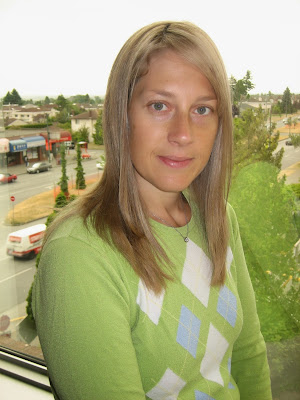
Dr. Sherri Wise. (Photo by Terry O'Neill)
Here's the text of my 2006 story. The photo to the right is one I took of Dr. Wise during our meeting seven years ago.

A new arrow in the quiver                 
Canadian victims push for a law to allow civil suits against terrorist groups

By TERRY O’NEILL

It’s a typical tourist snapshot. Three friends, sitting around a table at an outdoor restaurant, pose for a photographer, their broad smiles filling the frame. Three friends: oblivious to the fact that, as their happy moment in Jerusalem was being captured for posterity, three Palestinian suicide bombers were on their way to the Beth Yehuda pedestrian mall in which they were sitting. Within an hour, all three would be injured, their lives scarred by the memory of that afternoon nine years ago.

The blasts, which took place at 2 p.m., September 4, 1997, killed five innocent victims as well as the bombers, and injured a total of 181 people. Sherri Wise, posing in the middle of the picture, was one of the survivors. Today, the smile still seems to come easily to the face of the Vancouver dentist, who was celebrating the successful end of a month’s volunteer work in the Israeli city when the attack took place. Wise, now 36, suffered terrible injuries—second- and third-degree burns to 40 per cent of her body, shrapnel wounds to her foot and legs, temporary hearing impairment, and the loss most of her hair—but she’s fully recovered now, save the scars she bears, both physical and emotional. “I tend to be a little sad around the anniversary, but with time, time does heal all wounds to a degree,” she says. “And the memories of it tend to fade.”

But while memories may fade, Wise’s determination to do something in response to the terror attack continues to grow. Wise is part of a small but resolute group of Canadians trying to persuade the federal government to enact legislation allowing terror survivors and the families of terror victims to launch civil suits against foreign states or domestic groups that have supported terrorist organizations responsible for killing or injuring Canadians. While in opposition last year, Conservative MP Stockwell Day introduced a private-member’s bill to allow such suits, but the bill died before being voted on. Day is now minister of public safety. He did not respond to several requests for an interview on the issue.

Three new private-member’s bills on the same subject are currently before Parliament, one in the Senate and two in the House of Commons. Of the three, the one introduced by Sen. David Tkachuk, a Conservative from Saskatchewan, has proceeded the furthest, to second-reading debate, which took place in late June. The two bills introduced into the House of Commons, by Liberal MP Susan Kadis of Ontario and Tory MP Nina Grewal of B.C., have yet to be debated.

“There’s very active lobbying on my part and on other victims of terrorism for the proposed law to get the attention that it deserves,” says Maureen Basnicki of Toronto, a founding member of the Canadian Coalition Against Terror, the main group pushing for the law. Basnicki, whose husband Ken was killed in the World Trade Center attack of September 11, 2001, is passionate about the cause. “You know, our general [Rick] Hillier once said that Canadian troops were in Afghanistan to kill scum bags,” she says. “I would like to see the ability to sue some scum bags. And that’s my description of them, really. I’m not offended by that at all.”

The U.S. amended its laws in 1996 and 1997 to allow such suits in that country, but there are two impediments to similar actions in Canada: first, the State Immunity Act protects foreign states from lawsuits; second, legal experts say no clear procedure exists for litigants to sue terrorists or their organizations. The bills currently before Parliament would level those roadblocks, but it’s not known if the government will throw its weight behind the legislation. That doesn’t mean the government is standing still in the fight against terrorism, though. On July 7, Finance Minister Jim Flaherty announced that Ottawa would spend $5 million over the next five years to establish a new permanent headquarters in Toronto for the Egmont Group, the world’s anti-money-laundering agency whose work is increasingly aimed at fighting terrorist organizations.
Speaking at a conference in New York in January, international defence expert Peter Leitner said there’s ample justification for the federal government to amend its laws to support the civil suits against terrorists. “There is something fundamentally absurd with the current legal arrangements in Canada that allows lawsuits against Iran for selling you rotten pistachios, but bars legal action against them for sponsoring terrorist acts which kill Canadian citizens abroad,” he said.

Similarly, Toronto’s Alastair Gordon, president of the Canadian Coalition for Democracies, believes the civil-suit legislation would be of great value in the fight against terrorism. “There is no single tool which will deal with the worldwide phenomenon of Islamist terrorism,” he says. “The criminal justice system is one tool, the civil courts are another tool, and of course, the armed forces are yet another tool. It is a crime of omission to deny Canadians that second tool.” Wise, for one, hopes Parliament is quick to give Canadians this tool. “I think that Canadian citizens need to know their government is behind them,” she says.

Parliament resumes sitting September 18, just a week after the fifth anniversary of the 9/11 attack. To victims of terror and their families, there could be few more apt tributes to those who died on that day than for Parliament to pass the civil-suit legislation before year’s end.  


Friday, September 27, 2013

Mr. Gore, are you there?

If you're the typical Canadian, the news today, that there has been very little temperature rise over the past two decades despite increased CO2 levels in the atmosphere and despite every major climate-change model predicting big increases, will no doubt come as a shock.
But even the UN's Intergovernmental Panel on Climate Change (IPCC), which has delivered highly-torqued reports (see, especially, the "Climategate" scandal) that fanned the alarmist flames in years gone by, has now, essentially, had to admit that it was wrong. Here's a link to the big story. And here's a link to an excellent story about how the IPCC's supporters tied themselves up in knots over the possibility that the new, inconvenient fact might have to be covered up to as not to give succor to climate-change skeptics.
More links: here's a link to a very revealing story about how the alarmists try to mislead the public by puffing up their credentials.
Finally, the graph here (from The National Post FP Opinion Page this morning) shows predicted temperature gains compared to actual observed temperature (from balloon and satellite recorders) over the past two decades.
And so, we must ask ourselves: If the all temperature-rise predictions have proven completely inaccurate, what else about global-warming, climate-change theory is also wrong? Mr. Gore, are you there?

Wednesday, September 25, 2013

Coquitlam should be rewarded for shouldering population growth

I don't have enough information to comment on whether or not Vision Vancouver is mishandling the way the City of Vancouver is proceeding with rezoning plans for several neighbourhoods--rezoning that would lead to higher densities.
However, I think it is obvious that the public pushback, which was once again in view last night (see this story) is not simply about concerns over inadequate consultation, but is also reflective of deep concerns about densification.
Coincidentally, I attended a meeting this morning, staged by Metro Vancouver and MC'd by Mayor Richard Stewart, that looked at the importance of well-planned densification and, specifically, its relationship to transit. Coquitlam is getting it right, for the most part.
Nevertheless, a major issue is that, while Coquitlam is shouldering its fair share of regional population growth by proceeding with such multi-family-centric projects as the Partington Creek neighbourhood on Burke Mountain, the ultimate success of such projects depends on getting frequent, reliable public transit into the area. And the fact is, this sort of service is lagging in areas such as Burke Mountain.

Compare that with Vancouver's situation. As the map to the right shows (and if you can't see it clearly, you can click here to see the web version), Vancouver is extremely well served by the region's Frequent Transit Network, aka FTN (the orange lines).
So here's my point: I think that if Vancouver ends up backing down on the densification rezoning and, thereby, fails to take its proper role in shouldering population growth, then Translink must seriously look at downgrading the FTN in the City of Vancouver and improving it in cities like Coquitlam that are living up to their commitments.
Vancouver shouldn't be able to have its cake and eat it too--to have a rich FTN while refusing to proceed with rezoning to allow increased densities in selected neighbourhoods. Period.


Monday, September 9, 2013

Something missing from a $2-coin

One of the bits of trivia that I enjoy sharing with friends is the fact that every Canadian coin (or so I thought) carries the inscription "D.G. Regina" around the image of the Queen. The vast majority of people have not noticed it and, even if they had, they have no idea what it means.

I'm always happy to explain that it is a shortened form of the Latin expression, "Dei Gratia Regina" which in turn means, "By the Grace of God, Queen."

I quite like the little saying, for the simple reason that it places things in perspective by telling us that even the head of state, Queen Elizabeth, is in her position only by the grace of God. By extension, it helps each and every one of us to keep our pride in check by reminding us of the nature of creation.

The coin in question. Guess what's missing.
(From mintnewsblog.com)
And so it came as a surprise earlier this summer when I noticed that a commemorative tooney I briefly had in my possession did not carry the inscription. I wondered if this was the result of a deliberate policy to start phasing out the expression--a move that, if reflective of modernization or secularization, would have been a great shame.

I therefore sent a few emails to the Canada mint, seeking an explanation. This morning, I received a satisfactory answer, from Alex Reeves, senior manager of communications. Here it is, in its entirety.:

Good morning Terry.  I believe you are referring to the 2012 $2 circulation coin commemorating the 200th anniversary of the War of 1812.  The coin features HMS Shannon on the reverse, with the inscription The War of/La guerre de 1812 and the date 1812.  Normally, this side of the coin features the denomination and the word “CANADA”.  As these elements are mandatory on all Canadian legal tender coins, we had to move them to the obverse of the coin (around the effigy of the Queen), which meant that “D.G. Regina” had to be removed to create space.  Note that D.G. Regina is not a mandatory element of Canadian coins and that it is sometimes removed for this type of design considerations.  This was also the case with our 25-cent coins  commemorating the Vancouver 2010 Winter Games, where we had to make room for the Olympic and Paralympic logos.


Wednesday, August 21, 2013

Shining a light on campaign financing


I just received this press release from the BC government, re new rules for municipal elections. Interesting and important stuff. I am in agreement with the proposed rules re disclosure. In fact, I believe the rules around disclosure should go even further. For instance, anyone receiving a contribution from a person or organization with a DIRECT financial relationship with the city -- such as a garbage-collection contractor of a trade union that represents municipal workers -- should report that donation immediately, while the campaign is still underway. The public has a right to know this information before the votes are cast, not after.


NEWS RELEASE
For Immediate Release
2013CSCD0056-001269
Aug. 21, 2013 

Ministry of Community, Sport and Cultural Development 

Modernization of local government elections 

VICTORIA - The Province is moving ahead with making changes to the rules regarding local government elections, Coralee Oakes, Minister of Community, Sport and Culural Development, announced today. 

The intended changes are the most significant to local elections legislation in nearly two decades and are a reflection of the recommendations of the joint Provincial and Union of BC Municipalities (UBCM) Local Government Elections Task Force. 

Local government election rules apply to municipalities, regional districts, parks boards, the Islands Trust and boards of education. 
Local election rules will be modernized in two phases: 

* A white paper outlining government's intentions will be released in early September and legislation is scheduled to be introduced in Spring 2014 to implement task force recommendations, except expense limits, for the 2014 local elections.
 
* Consultation with key stakeholders on expense limits will be undertaken 
starting in November. This consultation will inform further legislative 
changes for the 2017 elections. 

The rules for next year's November elections will be consolidated in a proposed new act for campaign finance in local elections. Details of these changes will be included in the white paper to be released early this fall. Some highlights include: 

* Disclosure and registration by third-party advertisers. 
* Sponsorship information to be required on all election advertising. 
* All campaign finance disclosure statements to be filed 90 days after the election rather than 120 days. 
* Banning anonymous contributions. 

The proposed legislation also will enable a key role for Elections BC in compliance and enforcement of campaign finance rules in local elections. 

Quotes: 

Coralee Oakes, Minister of Community, Sport and Cultural Development - 

"We are committed to ensuring that election participants are fully aware of any changes well in advance of the Nov. 15, 2014, local elections. These changes are about enhancing transparency and accountability." 

"UBCM was a significant partner in developing the recommendations that have informed our legislative process. We appreciate UBCM's continued advice and support as we move forward." 

Mary Sjostrom, president, Union of BC Municipalities - 

"UBCM is pleased to see that the Province is moving forward on elections legislation. The phased approach they are adopting will help ensure the changes will work for the full range of communities in B.C. All candidates will look forward to learning what the rules will be for the 2014 
campaign." 

Quick Facts: 

* Local government elections are held every three years in British Columbia. The next election is scheduled for Nov. 15, 2014. 
* The purpose of a white paper is to indicate government's direction prior to the introduction of legislation. White papers also can serve as educational tools. 
* The campaign finance rules apply to election participants including candidates, elector organizations, and third party advertisers in local elections. 
* The deadline for public comment on the white paper is Oct. 23, 2013. 
* A website link and email address will be provided when the white paper is released. 
* The Local Government Elections Task Force received well over 10,000 written indications of opinion on the topics it reviewed and on other aspects of local elections. 

Contact:

Communications
Community, Sport and Cultural Development
250 387-4089 

Connect with the Province of B.C. at: www.gov.bc.ca/connect