"Reason is always a kind of brute force; those who appeal to the head rather than the heart, however pallid and polite, are necessarily men of violence. We speak of 'touching' a man's heart, but we can do nothing to his head but hit it." --G.K. Chesterton
Showing posts with label Alex Schadenberg. Show all posts

Friday, July 3, 2026

B.C. gov't silent as 'shocking' MAiD errors pile up

A version of this story will appear soon at the Canadian Catholic News website.

A confidential British Columbia government document obtained by Canadian Catholic News shows that doctors, nurse practitioners, and pharmacists in that province committed what observers say is a “shocking” and “alarming” number of procedural errors while managing euthanasia cases.

The Ministry of Health report, entitled “Medical Assistance in Dying (MAiD) Oversight 2024 Year End Report,” was made public in response to a Freedom of Information application.

It shows that more than half of all “MAiD case outcomes”—51.9 percent, to be exact—during that year required some sort of corrective “follow-up” by the province’s secretive MAiD Oversight Unit.

The province recorded 4,169 MAiD cases in 2024, including 1,169 cases in which euthanasia applications were launched but the fatal procedure was not conducted.

The oversight unit found 2,807 errors in all such MAiD files, 353 of which “required education to practitioners and pharmacists to ensure they understand legal requirements and the professional standards associated with MAiD,” the confidential report states.

“It’s all very shocking that you have such a large amount and percentage of errors in British Columbia,” Alex Schadenberg, executive director of the Ontario-based Euthanasia Prevention Coalition, said in an interview. “It’s clear there are huge problems.”

The situation is particularly acute because B.C. leads the country in the percentage of all deaths that are caused by MAiD, Schadenberg pointed out. In 2024, for example, 6.5 percent of the province’s deaths were attributed to euthanasia, compared with the national average of 5.1 percent.

Amanda Achtman, ethics director of Canadian Physicians for Life, said the report has troubling implications as it suggests that MAiD is not really medical care, “but rather abandonment.”

“The staggering level of errors surrounding the practice of euthanasia in Canada betrays a level of indifference and callousness toward Canadian patients at end of life,” Achtman said in an interview. “At the same time, every euthanasia death is a medical ‘error’ because it is an aberration of sound medical practice rooted in the Hippocratic oath to ‘do not harm.’”

The harm caused by the errors is widespread. For families, whose loved ones have been euthanized, errors by MAiD practitioners are not merely gaps in bureaucratic paperwork, “but represent the negligence with which their loved ones were dismissively treated at the height of their greatest vulnerability,” she said.

B.C.’s Minister of Health, Josie Osborne, did not respond to a request for an interview on the subject. And nor has she yet answered questions, raised in the B.C. Legislature in April by Opposition Health Critic Dr. Anna Kindy, about the need for better and more-public oversight of B.C.’s MAiD regime.

“Will B.C. commit to public annual reporting, not just of MAiD volume but of compliance concerns, referrals ... [MAiD ]trends, and recommendations for system improvement?” Dr. Kindy asked Osborne.

Dr. Kindy’s questions were based, in part, on the B.C. Catholic newspaper’s July 2025 publication of a report on the MAiD Oversight Unit’s 2023 report, which found 2,833 errors in the management of 3,808 MAiD cases. B.C. family doctor Kevin Sclater, who quit his job at a hospice in 2022, in part, because of the “moral distress” he said he suffered by having to discuss MAiD with patients, said he is “shocked about an error rate that is so high. The Ministry of Health really should tighten up that issue.”

With the Minister not yet answering questions about the error rate, CCN turned to B.C.’s professional medical association, Doctors of B.C., for comment on the need to better manage MAiD in the province.

A spokesman answered that the evaluation of “clinical outcomes falls outside our scope,” and said answers to “questions related to regulatory oversight” were the purview of the College of Physicians and Surgeons of BC.

But that institution, in turn, said its mandate is only to regulate physicians and surgeons, not to “comment on clinical, health or health system matters.” It suggested contacting the Ministry of Health, instead.

Dr. Sclater agreed that the ministry should be responsible for improving the administration of MAiD. As it stands now, “a MAiD assessment is really only a superficial competency assessment,” he said. Because it “doesn’t evaluate and document a person’s competence for medical decision-making ... the entire evaluation process is really a sham.”

He added that the current process also leaves the public “very vulnerable to the whims of the euthanasia provider, who may be on a mission to ‘help’ a group of people who have a restricted capacity to object.”

The overlapping issues—of lax oversight, multiple agencies’ failure to take responsibility for enforcement of rules, and rogue euthanasia-specialist doctors—also arose in a parliamentary committee’s June 17 recommendation to “indefinitely exclude” from eligibility for MAiD a patient whose sole underlying medical condition is a mental illness.

Committee co-chair Dr. Marcus Powlowski (Lib – Thunder Bay-Rainy River) wrote in a “supplementary opinion” to the main report that the committee “heard disturbing stories of questionable conduct by some MAiD providers.”

In fact, Dr. Powlowski, a physician himself, wrote, “it is not hard to conclude that some providers take an exceedingly expansive interpretation” of MAiD-eligibility rules and exhibit “a seemingly cavalier attitude towards end of a life.”

Furthermore, he said the committee heard “scant, if any evidence” to indicate that bodies, such as colleges of physicians and surgeons, “provide adequate safeguards” or have “seriously pursued allegations of misconduct by MAiD providers.”

“Several witnesses suggested the criminal system, the medical colleges, and at times the government ministries responsible for MAiD provision ... all allegedly treat enforcement as someone else’s responsibility,” he wrote.

He could have been describing CCN’s failure to find a government or professional organization willing to comment about the MAiD Oversight Unit’s report.

Release of the B.C. document comes at the same time as Canada marked the 10th anniversary of the legalization of MAiD on June 17—an anniversary that prompted the Canadian Conference of Catholic Bishops’ Standing Committee for Family and Life to issue a statement urging Catholics to “remain steadfast in opposing euthanasia and assisted suicide, to pray for the conversion of hearts and minds away from this practice, and to be present to persons who are sick and vulnerable.”

While elimination of legalized euthanasia is also the ultimate goal of the Euthanasia Prevention Coalition, Schadenberg said tighter control, better oversight, and public reporting on MAiD remains an urgent need in British Columbia and elsewhere.

Indeed, B.C.’s own confidential data paint a picture of a MAiD system operating with significant procedural failings and no clear lines of accountability.

With the Ministry of Health not responding to an interview request, professional bodies deflecting responsibility, and at least one federal lawmaker warning of “cavalier” practices among some providers, British Columbians are left with a regime in which thousands of life‑and‑death decisions proceed with limited transparency and inconsistent oversight.

As MAiD continues to expand and the province continues to record the highest euthanasia rate in Canada—and Canada itself continues to record the second highest such rate in the world—the unanswered questions about safety, competence, and public protection appear more urgent than ever.

Wednesday, May 6, 2026

Indigenous leaders warned Ottawa on MAiD, but it was expanded anyway

More of my MAiD coverage, marking the 10th anniversary of its legalization, as published in the BC Catholic.

In this third part of our MAiD at 10 series examining the scale and impact of Medical Assistance in Dying in Canada, reporter Terry O’Neill examines Indigenous concerns surrounding MAiD, including warnings that euthanasia conflicts with traditional beliefs and may be replacing needed health care and supports.

As the Canadian Senate considered expanding MAiD eligibility in 2021, a group of 15 prominent Indigenous leaders complained they had not been properly consulted on the matter and, moreover, that they had “grave concerns” about legalized euthanasia’s adverse impact “on our vulnerable population.”

Parliament pressed ahead with the expansion despite the Indigenous concerns. The federal government then launched a program that focused more on better data collection and “listening” to diverse viewpoints than on protecting vulnerable Indigenous people from MAiD.

For at least one prominent MAiD critic, the federal government appeared more concerned with actively increasing Indigenous peoples’ access to MAiD than with improving the delivery of health services to them. health service delivery for them.

“It’s a sort of reverse discrimination,” Alex Schadenberg, executive director of the Euthanasia Prevention Coalition, said in an interview. “It’s horrible, because the Native community was saying, ‘We don’t want this.’”

Indigenous peoples were very clear that euthanasia does not fit with their cultural values, Schadenberg said. “And how does Health Canada respond? By focusing on ways to make it easier for Indigenous people to access MAiD.”

He said the evidence is in Health Canada’s Sixth Annual Report on MAiD, released last November with statistics from 2024. of last year, which focuses on 2024 statistics.

The report noted that Caucasians, who make up about 70 per cent of Canada’s population, accounted for 96 per cent of those receiving MAiD in 2024. Indigenous people, by contrast, represent about five percent of the population but only 0.4 percent of MAiD recipients.

“You’d think Health Canada might at least wonder why so many Caucasians were opting for MAiD, but it doesn’t, said Schadenberg. “But there’s a whole section on the Indigenous numbers, and it seems more concerned about improving data collection and addressing inadequate access to MAiD than about protecting Indigenous life.”

The section entitled “Indigenous people who received MAiD” reports that low euthanasia numbers among Indigenous persons may be due to challenges in accessing MAiD, as well as “distrust of the health care system, based on experiences of anti-Indigenous racism,” potential “discomfort and/or lack of understanding” regarding MAiD, and “potential disconnection between MAiD and Indigenous worldviews.”

Given that three of the four factors suggest Indigenous opposition to MAiD, Schadenberg wonders why more isn’t being done to protect them from euthanasia.

It’s a concern shared by Brendon Moore, national chief of Canada’s Congress of Aboriginal Peoples. As reported in August 2025 in Canada’s National Observer, Moore said MAiD’s availability, especially related to the looming March 2027 expansion of MAiD to those whose sole underlying condition is a mental illness, is especially troubling for communities that already experience high rates of suicide as a result of intergenerational trauma and systemic racism.

“We’re looking for an equitable opportunity to live first,” he said. “If we had culturally safe palliative care and mental health support, some people might choose that path instead of moving toward MAiD.”

Reporter Sonal Gupta summed up the problem by writing, “The nightmare scenario: MAiD could substitute investments in living supports and mental health care if underlying conditions aren’t addressed first.”

Moore did not respond to a request from the B.C. Catholic to comment further on the issue.

upta also reported that, according to a document obtained through an access-to-information request, the federal government invested more than $3.3 million in Indigenous-led MAiD consultations across the country. In fact, just weeks after Health Canada published its latest MAiD statistical report, it published a report on the results of those consultations.

The December 2025 report says Indigenous opinion on MAiD is generally divided into three camps: support without qualification, openness only in certain circumstances, and opposition. The report does not provide percentages for each group.

Among those opposed, some participants feared that MAiD might normalize or even encourage suicide, while others said there is an urgent need for accessible, culturally appropriate health care, mental health care, and life-promotion initiatives.

The report’s summary on Indigenous opposition points to strong moral, spiritual, and religious values as the foundation of that opposition. “They said that an end-of-life decision should not be made by humans and to control it through MAiD was to overstep human boundaries,” the report states. “Death should be left in the hands of a Creator, God or higher power.”

Some opponents also view MAiD as a continuation of colonial policies or a means to control and harm Indigenous peoples. “For them, MAiD is the same as murder, genocide or a sin and the systematic euthanasia of vulnerable people,” the report states.

“Some participants felt that an individual could be coerced into choosing MAiD, with one participant saying that Indigenous peoples may be ‘bullied into a decision.’”

Wednesday, December 3, 2025

Health Canada trying to manufacture consent for MAiD expansion, B.C. pro-life leader says

The third of three new stories I've written for the B.C. Catholic:

The head of a new province-wide pro-life organization says Health Canada is attempting to manipulate public opinion to allow expansion of access to Medical Assistance in Dying.

Marian Neels, president of the B.C. Life Network, whose membership comprises 10 pro-life organizations, said in an interview that a Health Canada report released

in late October is clearly a bid to orchestrate approval of advance requests for MAiD, a change that could allow persons with even minor medical ailments to make arrangements to be euthanized if, at some future date, they become incapacitated.

“Their strategy is basically about getting people used to the idea, slowly but steadily getting the word out,” said Neels (pictured, right), who is also the education and community-outreach co-ordinator at Cherish Women’s Resource Centre, a Chilliwack pro-life group.

It’s just one more way in which pro-MAiD activists and government bodies are exerting pressure to expand Canada’s already permissive MAiD regime. For example, Health Canada has published medical-practice guidelines stating that doctors “must” initiate MAiD discussions with qualified patients.

As well, the B.C.-government-directed Vancouver Coastal Health authority stands accused of situating an unidentified euthanasia facility near a dialysis patients to make the availability of MAiD known to patients.

In 2023, Parliament’s Special Joint Committee on MAiD recommended that the Criminal Code of Canada be amended to allow not only advance requests but also for “mature minors” to access MAiD.

Finally, in 2022, the Quebec College of Physicians went so far as to suggest that MAiD eligibility be expanded to severely ill infants, an idea that actually promotes infanticide, given that infants are in no position to give their consent to being killed.

All this comes at a time when Canada already records more euthanasia-related deaths than any other jurisdiction in the world.

This startling fact became clear on November 28, when Health Canada made public its Sixth Annual Report on Medical Assistance in Dying. The report showed that 16,499 persons died by MAiD in Canada last year, an increase of almost seven percent from 2023. The Netherlands, with 9,958 MAiD-type deaths, had 2024’s second-highest total.

At 5.1 percent of all deaths, Canada has the second-highest rate of MAiD deaths in the world, second only to the less-populated Netherlands’ rate of 5.8 percent. “I think our country has become very cold to people who are very vulnerable,” Alex Schadenberg, executive director of the Euthanasia Prevention Coalition, said in response to the new figures. “We like to think of ourselves as kind and friendly, but the statistics show the opposite.”

On the issue of advance requests, Neels said Health Canada’s report clearly aims to get people comfortable with the idea so amendments allowing the practice can be passed in law with a minimum of opposition.

“It’s just like anything—when you first hear about it, you have concerns, you might be upset,” she said. “But then after a while you just kind of become desensitized. You start seeing it as a good thing when it’s clearly bad.”

Under current law, qualifying persons can consent to be euthanized only if they have the legal capacity to do so at the time of the procedure. In a typical case, advance requests would allow a person who has been newly diagnosed with dementia, for example, to write a legally binding instruction to be euthanized at an unspecified date in the future when and if certain conditions arise, such as loss of memory or bodily functions.

Advance requests might also allow healthy persons, living only with high blood pressure, for example, to declare that they wish to be euthanized if they suffer a heart attack or stroke that renders them comatose.

The Health Canada report in question is its summary of the “national conversation on advance requests for MAiD” that it launched late last year by way of an online questionnaire and secret roundtable discussions with handpicked participants.

Anti-MAiD critics said at the time that the entire process seemed rigged to obtain support for advance requests.

Health Canada has now reported that more than 46,000 participants completed the online questionnaire, which was available from December 2024 to February 2025. Health Canada also conducted a scientific survey of 1,000 Canadians on the subject.

The agency said 69 percent of respondents to the online questionnaire and 67 percent of Canadians surveyed in the poll supported advance requests for people diagnosed with a serious or incurable condition that will lead to a loss of decision-making capacity.

In a second scenario presented by Health Canada, 76 percent of respondents to the questionnaire and 58 percent of those surveyed supported advance requests for people with a medical condition that could lead to sudden or unexpected loss of capacity to make decisions.

The report made no recommendations, but did note that the province of Quebec is allowing advance requests, even though federal law makes them illegal. (The province has skirted the law by instructing Crown prosecutors not to prosecute advance-requests cases.) In response to an emailed question from The B.C. Catholic about what steps might be taken in response to the “national conversation” report, Health Canada’s media-relations office wrote, in part, “The Government of Canada has not yet made any decisions about expanding eligibility to allow for advance requests. The federal government will continue working with provinces and territories, health care providers and partners on this important matter. Have a great day!”

The B.C. Catholic’s similar question to the office of federal Health Minister Marjorie Michel was answered only with an assurance that “your correspondence is being carefully reviewed.”

The Canadian Conference of Catholic Bishops sent a letter to Michel’s predecessor, Kamal Khera, in March, declaring the bishops’ unequivocal opposition to the legalization of advance requests.

Calgary Bishop William T. McGrattan, who was president of the CCCB at the time, wrote that the Church in Canada is deeply concerned by the rapid expansion of euthanasia, which has led the country to be the world’s fastest-growing assisted-dying jurisdiction and ranked second globally for “MAiD” deaths as a percentage of total deaths.

“We strongly urge and implore the federal government to halt any further expansion of ‘MAiD’ and focus instead on advancing compassionate, life-affirming palliative care,” Bishop McGrattan wrote.

He said advance requests set “a dangerous precedent” by allowing individuals to be euthanized without their immediate consent and enabling third parties to make subjective decisions about when they should die.

As well, advance requests place already vulnerable individuals, particularly those with dementia, “at even greater risk” because, at early stages of the disease, individuals may not fully understand the complexities of future illness and, therefore, may be unable to make informed decisions.

In addition, advance requests could force individuals to evaluate their future quality of life prematurely. “No one can predict with certainty how they may feel at any point in the future,” Bishop McGrattan wrote. “Recent reports indicate that some individuals who requested ‘MAiD’ later changed their minds and withdrew their requests.”

Canada’s leading pro-euthanasia organization, Dying with Dignity Canada, rejects such arguments, countering that prohibition of advance requests is a cruel denial of a patient’s human rights. The organization also supports allowing “mature minors” to access MAiD, and extending the right to MAiD to patients whose sole underlying medical condition is irremediable mental illness, an eligibility extension that is scheduled to become legal in March 2027. Conservative MP Tamara Jansen (Langley City—Cloverdale) has introduced a private-member’s bill to outlaw the mental-illness expansion. It was scheduled for Second Reading debate in the House of Commons on Dec. 5.

Schadenberg said Canada has sunk to a level that was hard to imagine a decade ago. “MAiD boosters say it’s all about personal choice and autonomy,” he said. “No. It’s actually about doctors saying, ‘I agree. Your life is not worth living and I’m willing to kill you.’ And that’s very serious.”

B.C. Life Network’s Neels, who is a member of the Dutch Reformed Church, said her organization intends to focus on issues related to both the beginning and end of life, and will certainly look at what measures it might take to oppose legalization of advance requests.

Action items for the group, which first met in October 2024 and formalized its leadership in February of this year, could include erecting billboards opposing advance requests and holding online workshops to both educate and plan for action.

“One of the best things would be to come up with personal stories,” she said. “The other side works on emotions, too. We have to fight the impression that Christians are so cruel, that we allow somebody to suffer at the end of their life.”

Dialysis one way, MAiD the other? Critics sound alarm about Vancouver clinics offering life or death

My latest, as published in the B.C. Catholic weekly newspaper:

The head of one of Canada’s leading anti-euthanasia organizations is accusing the B.C. government of deliberately placing a non-descript MAiD facility beside a Vancouver dialysis clinic as a quiet reminder to patients that ending their lives is an available option.

“I don’t think I’m being too extreme about it,” Alex Schadenberg, executive director of the Euthanasia Prevention Coalition, said in an interview. “I think putting [the MAiD clinic] beside a dialysis clinic is intentional.”

The Vancouver Coast Health Authority won’t say what the facility is. Insiders say it’s a euthanasia clinic, conveniently situated beside a dialysis clinic.

Both Schadenberg and The B.C. Catholic received a tip about the existence of a standalone MAiD clinic at a building that houses a dialysis clinic and offices of the provincial-government-directed Vancouver Coastal Health authority.

What the location of a euthanasia facility so close to a dialysis clinic would mean, Schadenberg said, is that “if you’re very down” about the thrice-weekly routine of undergoing dialysis, “here’s another option.”

He said the apparent opening of a MAiD clinic that is not associated with a hospital or hospice setting is consistent with the B.C. government’s record of strong support for medical assistance in dying.

“Unlike in Ontario, for example, the government in B.C. is leading the way,” Schadenberg said. “This clinic shows they are intentionally in the business of killing people, not just providing a legally mandated service. It’s a big concern. The government is directly involved in promoting death.”

The B.C. Catholic emailed and phoned Vancouver Coastal, which operates 120 facilities serving 1.25 million people, in an attempt to confirm the existence of the facility, but the health authority did not provide answers to questions about the purported clinic’s origins, cost, or even whether it actually existed.

However, a B.C. Catholic visit to the location at 520 West 6th Ave. in Vancouver found evidence to support the tip.

The building is a five-storey structure primarily housing offices and facilities of Vancouver Coastal. The main entrance opens into a lobby area. To the right is a dialysis clinic operated by Providence Health Care. To the left is a clinic-like area behind frosted glass.

That clinic’s entrance door is labelled “Vancouver Coastal Health, Horizon Space.” No one answered a reporter’s repeated knocking at the locked door.

The building directory shows a dialysis clinic but no mention of Horizon Space.

Vancouver Coastal does not have any record of Horizon Space on its website. The building’s directory, next to its elevators, does not list the space.

In response to B.C. Catholic questions about Horizon and other locations at which Vancouver Coastal offers MAiD, a spokesman for Vancouver Coastal provided only a vague answer.

“There is no designated location for patients requesting MAiD,” he said in part. “Patients will have their requests addressed, assessments performed and, if eligible, receive an assisted death in the care location consistent with their care needs and wishes.”

After he failed to answer follow-up questions about Horizon Space, The B.C. Catholic filed a freedom-of-information application with Vancouver Coastal seeking confirmation of Horizon’s existence and intended use.

Schadenberg said Vancouver Coastal’s silence on Horizon’s existence serves only to confirm the insider’s tip that the government had opened a secret MAiD facility.

If so, Vancouver family doctor Will Johnston, a member of Physicians for Life, said in an interview that such a clinic might have its uses.

Johnston, who also heads the Euthanasia Resistance Coalition of B.C., said that any move to take euthanasia out of medical settings such as palliative care wards and hospices “shows that this shameful behaviour can be separated from the hospital system.”

A “death space” does not need to be part of actual health care, Dr. Johnston said. “And, in fact, it doesn’t even have to be staffed by doctors and nurses. It’s really simple to kill people.”

He said anyone can be trained to administer the drug cocktail used to kill euthanasia patients.

“I’m just saying that, as a long-term, aspirational project, having this free-standing facility separate from the health-care system, per se, means that maybe we can work towards making sure the staff are separate from the health-care system as well,” he said.

The B.C. government reported that the province recorded exactly 3,000 MAiD deaths in 2024, 633 (21.1 per cent) of which were in the Vancouver Coastal region.

According to government data, the most common location for MAiD to be performed in B.C. was in a private residence (40.2 per cent), followed by hospital, excluding palliative care beds (26.9 per cent), hospice (12.9 per cent), and palliative care facility (8.9 per cent). Other locations included community care facility, residential care facility, and medical clinic or ambulatory setting.

Tuesday, February 11, 2020

The late Justice Proudfoot was more than just a trailblazer

The following is the text of a story I wrote for the B.C. Catholic newspaper. The story will be published in the Feb. 17 edition of the weekly publication.


When the nice old lady in the little red sports car pulled up to their school, students at St. Augustine’s Elementary in Vancouver knew they were in for a special day.

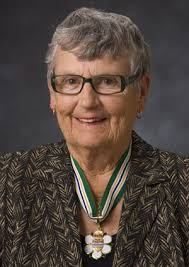
Proudfoot: An Order of B.C. recipient.
Whether the short-haired, soft-spoken woman would drop in on classrooms, spend time with kindergarteners, or have serious chats with Grade 7 students about their responsibilities, she always left everyone feeling a little better about themselves. Their affection for her was made clear after Mass on Sundays, when children would inevitably flock to her. The warm-hearted widow was especially close to her two Grade 7 “prayer buddies.”

That woman, Patricia Mathilda Proudfoot, passed away last fall at the age of 91, her death generating not only sadness in the St. Augustine’s community, but also laudatory news stories and published memorials about her trailblazing legacy as British Columbia’s first female judge at three levels of the courts.

On Nov. 25, 2019, a special joint sitting of B.C.’s Court of Appeal, Supreme Court, and Provincial Court took place at the Vancouver Law Courts in honour of Proudfoot, with members of the judiciary gathering to remember her and her contributions to the legal profession.

Accounts of her life largely omitted what she meant not only to St. Augustine’s school and parish, but also to the Archdiocese of Vancouver. These contributions were formally recognized in 2013 when Archbishop J. Michael Miller conferred on her the cross Pro Ecclesia et Pontifice (for Church and Pope), the highest Catholic award given to lay people.

Observers and acquaintances agree that the mark she left on society can be found not only in the example she set by quietly living out the principles of her Catholic faith, but also in the enduring nature of her principle- and common-sense-based jurisprudence.

Nowhere is this more evident than in her 1993 ruling in Rodriguez v. The Attorney General of B.C., when, sitting as a Justice of the B.C. Court of Appeal, Proudfoot and another judge upheld a lower-court ruling that denied euthanasia-advocate Sue Rodriguez the right to an assisted suicide – a ruling that was upheld by the Supreme Court of Canada later that year. (In 2015, however, that same court reversed itself and legalized assisted suicide.)

Today, as the federal government looks at expanding the circumstances in which Canadians can obtain “medical assistance in dying,” and with increasing international evidence that liberal euthanasia laws are leading to people being killed without their consent, Proudfoot’s warning about potential abuses of assisted suicide looks prophetic. “There is reason to fear that homicide of the terminally ill for ignoble motives may readily be disguised as aiding suicide,” she wrote.

“I think she called it right on,” said Alex Schadenberg, executive director of the Euthanasia Prevention Coalition. “What you have with this legislation in Canada [is] the perfect cover-up for murder.”

Proudfoot was the youngest of 10 children (nine girls and a boy) born into the German-speaking, wheat-farming Fahlam family of Kronau, Sask. Proudfoot told an interviewer for the Oral History Project at the University of British Columbia’s Allard School of Law that when the double-whammy of Depression and Dust Bowl drought led to the farm’s ruin, her parents and seven of the children, including Patricia, drove in a McLaughlin-Buick – their belongings towed behind in a homemade trailer – to Rutland, in B.C.’s Okanagan, to begin anew as fruit farmers. “Dad arrived, literally, with empty pockets,” she recalled.

Her only surviving sibling, Helen Schaeffer, 92, of Summerland, continued the story in an interview with The B.C. Catholic. “We were all raised Catholic. We went to church regularly at St. Theresa’s [parish in Kelowna],” she said. “We even had to go on Saturdays. We had a wonderful upbringing. Mother never preached to us, just set a good example.” She recalls her famous sister as being somewhat of a tomboy, extremely sports-minded, very bright in school, and wanting to be a lawyer from a very young age.

Proudfoot worked at up to three jobs to pay university tuition, graduated from UBC law school in 1952, and was called to the bar the following year, practising until she was appointed to the B.C. Provincial Court in 1971 – the first woman judge to sit in its criminal court. She was also the first woman judge appointed to the County Court of B.C., and to the B.C. Supreme Court. She was elevated to B.C.’s highest court, the Court of Appeal, in 1989 and retired in 2002.

Proudfoot (r) with sister: Strength of character.
“Patricia was a wonderful judge,” said her eulogist, retired Provincial Court Judge Bryan Davis. “She did have high expectations of everyone. She was kind, fair, reasonable, compassionate, and never intellectually dishonest or without integrity.”

His assessment is widely shared. “She treated her colleagues with respect and expected people to treat her the way she treated them,” said Lauri-Ann Fenlon, a current Justice of the B.C. Court of Appeal. “She was certainly a person of principle and good character.”

Although she and Proudfoot never served together, Fenlon said she knew Proudfoot by reputation as someone who approached the law in a very practical, common-sense way. Importantly, “she had courage – a strength of character.”

Other colleagues support the assessment. Mary Margaret MacKinnon, who serves as general counsel to both the Archdiocese of Vancouver and the Catholic Independent Schools of Vancouver Archdiocese, sat with Proudfoot on several boards. She said Proudfoot continually raised new ideas and looked for fair solutions.

“She gave of her time and talent to the archdiocese, and we are all in a better place because of that,” MacKinnon says. “She was filled with wisdom and kindness and good judgment. More importantly, she had a fantastic sense of humour and capacity for fun.”

Evidence of both wisdom and humour can be found in an anecdote that an online commentator, Kerry Kozak, shared following Proudfoot’s passing on Oct. 9. “I was a ‘rookie’ Supreme Court clerk,” Kozak wrote, “[…] when Madam Justice Patricia Proudfoot came into the courtroom. At the same time, so did 16 naked men and woman – Doukhobors who were protesting criminal charges brought against them in Grand Forks. Proudfoot had all the windows opened in that courtroom on a very chilly, cold day in the old New Westminster courthouse. […] They were all dressed the next day.”

On other professional fronts, Proudfoot led the B.C. Royal Commission on the Incarceration of Female Offenders and was a member of the Committee on Sexual Offences against Children and Youths, the Canada Pension Appeals Board, and the Canadian Panel on Extraordinary Challenges for the North American Free Trade Agreement.

As a volunteer, she worked with Vancouver Foundation projects involving children and youth, and the Canadian Council of Christians and Jews. Additionally, she was an honorary director of Big Sisters of B.C., a long-time supporter of the Franciscan Sisters of the Atonement in Vancouver’s Downtown Eastside, and sponsored at least five children in various countries through World Vision. Her many honours include three honorary degrees and membership in the Order of B.C.


Justice Patricia Proudfoot received the Order of British Columbia in 2007.
Proudfoot served the archdiocese as a member of the Advisory Committee on Clerical Sexual Misconduct from 2000 until 2015. Msgr. Gregory Smith, who was a fellow member of the committee until he left for studies in Rome in 2004, recalls well her solid counsel.

“I still marvel that for so many years we had someone of her stature serving, helping the Church deal with these critical issues – a tough-minded judge who had headed a Royal Commission looking into sexual abuse of female prisoners,” he said.

“It shows not only the depth of Pat Proudfoot’s commitment to the archdiocese, but also the depth of the archdiocese’s commitment to rooting out the destructive problem of sexual abuse by clergy.”

Proudfoot married travel writer Arthur Proudfoot in 1959, the marriage lasting 37 years until his death; they had no children. Schaeffer recalled that her sister drifted away from the Church for many years but returned with renewed faith later in life.

It was at St. Augustine’s Parish in Vancouver’s Kitsilano neighbourhood where Proudfoot’s commitment to community and church took root most profoundly. “It’s pretty clear that in her life she was very passionate about many things,” said parishioner Lawrence Pillon, “but about young adults and children in particular. There are many examples where she extended her expertise and her support in so many ways. And we certainly felt it at the school.”

Pillon said Proudfoot’s contribution to the steering committee (now called Faith and Foundation), struck to build a new St. Augustine’s school, was exceptional. “I think her participation was one of the reasons it was so successful,” he said. Today, two of the three phases of the new school have been completed.

“Here was a person who didn’t have children in the school but felt [the call] to be part of this whole great effort,” said Pillon. Along the way, “she became very close to the teachers, and I just can’t say enough about how close she became to so many people in the community during those years.”

He said Proudfoot wanted to inspire people to do the best they could. “And sometimes in the church, you really have to have that inspiration, that courage, that dedication, and she certainly exemplified that.”

The funeral Mass for Patricia Proudfoot was held Nov. 2 of last year at St. Augustine’s Church. A great crowd of parishioners – young and old, friends and acquaintances, and co-workers and admirers – attended, filling parking lots and neighbourhood streets with their vehicles.

One car was missing, though: a little red BMW Z3 sports car that over the years had become so familiar to the St. Augustine’s community. Needless to say, that car – and the extraordinary woman who drove it – will not soon be forgotten.